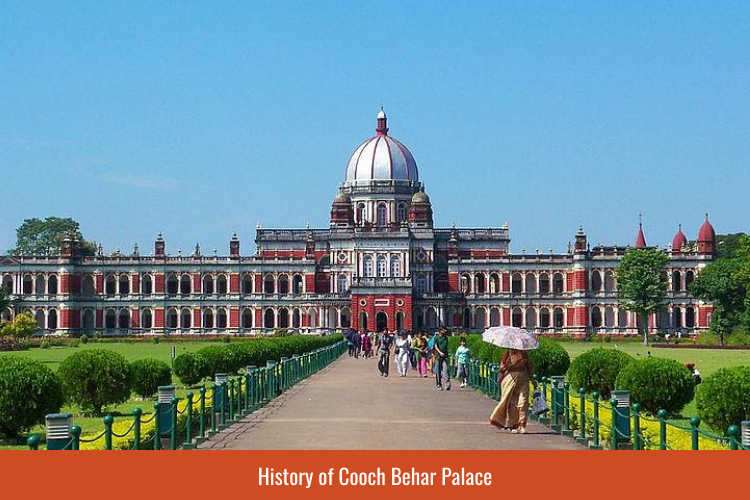
The Cooch Behar Rajbari, also called the Victor Jubilee Palace, is one of the most striking royal landmarks in Eastern India. The palace blends European elegance with local heritage. The deeper Cooch Behar Rajbari history reveals how the Koch rulers shaped the region’s culture and identity. Its red‑brick walls, long corridors, and graceful dome still reflect that royal past.
The palace is strongly linked to key members of the Koch dynasty. Maharaja Nripendra Narayan built and modernized it. Maharani Suniti Devi promoted education and social reforms from within these walls. Maharaja Jitendra Narayan added administrative stability. The palace also became famous as the birthplace of Maharani Gayatri Devi, who later became a celebrated figure in Jaipur.
Today, the Archaeological Survey of India (ASI) preserves the Rajbari. Part of the building serves as a museum displaying paintings, weapons, documents, and royal artefacts. Visitors and historians come here to explore the legacy of the Koch kingdom and its long cultural journey.
Origins of the Koch Dynasty and Historical Background of Cooch Behar
The story of Cooch Behar begins with the rise of the Koch dynasty in the early 16th century. The kingdom was founded by Biswa Singha, who united several tribal and regional groups of the Kamtapur region. His rule laid the base for a strong and organised state. The Koch kingdom soon expanded its influence across parts of North Bengal, Assam, and the eastern Himalayan foothills.
The kingdom reached its height under Maharaja Nara Narayan. His brother and general, Chilarai, played a major role in military campaigns. Under their rule, the Koch state became one of the most powerful kingdoms in eastern India. Administration improved. Trade routes developed. Cultural traditions flourished. Their era remains known as the golden age of the Koch kingdom.
After Nara Narayan’s time, the kingdom was divided. One branch became Koch Hajo in the Assam region. The other branch became Koch Bihar, which corresponds to present‑day Cooch Behar. This division shaped the political identity of the region for centuries. Koch Bihar later formed close ties with the Mughal Empire and then with the British.
By the 18th and 19th centuries, Koch Bihar had become a princely state under British protection. The British administration worked through local rulers but kept strong influence on governance. This period introduced new reforms, schools, institutions, and exposure to European culture. It was in this environment that future rulers like Maharaja Nripendra Narayan grew up.
The Koch rulers maintained their cultural identity even during these changes. Their palace, traditions, festivals, and royal ceremonies preserved the memory of their past. This background sets the stage for understanding how the Cooch Behar Rajbari emerged as a symbol of both heritage and modernisation in the late 19th century.
Maharaja Nripendra Narayan and the Construction of Cooch Behar Rajbari
The construction of the Cooch Behar Rajbari is closely connected to the life of Maharaja Nripendra Narayan. He became the ruler of Koch Bihar in 1863, when he was only ten months old. Because he was a minor, the administration went under the control of the British commissioner. His early years were shaped by British tutors, English education, and exposure to European ideas.
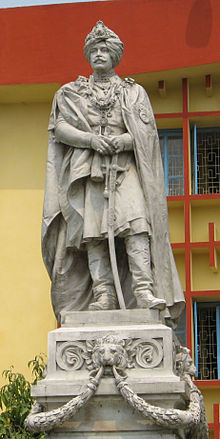
Nripendra Narayan regained full authority in 1884. By then, he had spent long periods in London, where he admired Western architecture, urban planning, and royal lifestyles. This influence shaped his vision for a modern and elegant royal palace in his own kingdom. He wanted a building that symbolised progress, confidence, and the changing identity of Koch Bihar under his rule.
The palace was built in 1887 to commemorate the Golden Jubilee of Queen Victoria’s reign. This is why the Rajbari is also called the Victor Jubilee Palace. Nripendra Narayan appointed the European architect F. Barckley to design the structure. Barckley drew heavily from Italian Renaissance and Classical European architectural styles. The result was a palace unlike any other in Eastern India.
The construction of the Rajbari also reflected the Maharaja’s desire to modernise Cooch Behar. Roads improved. Public buildings developed. Education and cultural institutions expanded. His queen, Maharani Suniti Devi, supported these reforms through social and educational initiatives, making the royal court a centre of modern thought.
Under Nripendra Narayan, Cooch Behar became one of the most organised princely states in the region. The palace he built still stands as the most visible symbol of his legacy. It marks the moment when Koch Bihar stepped into a new era—balancing tradition with modernity, and local heritage with global influences.
Architecture and Design of the Cooch Behar Rajbari
The Cooch Behar Rajbari is one of the finest examples of European‑inspired royal architecture in Eastern India. Its design follows the style of the Italian Renaissance, a choice made under the influence of Maharaja Nripendra Narayan. His long stay in London shaped his aesthetic taste. The palace’s balance, symmetry, and proportions reflect these influences clearly.
The architect F. Barckley designed the palace with a classical layout. The structure features long colonnades, arched verandas, tall windows, and decorative pediments. The palace dome is its most striking element. It resembles the grand domes of European civic buildings. Its stepped interior carvings add depth and elegance.
Although European in design, the palace also carries gentle hints of Indian tradition. Some interior motifs, patterns, and décor show local artistic influence. The blend makes the Rajbari unique among Bengal’s royal structures. It stands apart from the terracotta‑based architecture common in older regional palaces.
The building originally had three storeys. However, the 1897 earthquake damaged the upper portions. After repairs, the palace continued with two storeys. The front received fresh paint through the years, but the rear façade still retains its original 19th‑century look. This contrast gives visitors a clear idea of how the palace appeared in its early decades.
The design of the Rajbari also reflects the ambitions of the Koch rulers. It shows a desire to align the princely state with global architectural trends. It expresses modernity but still holds the legacy of the Koch kingdom. The palace remains a landmark where European style meets the heritage of North Bengal.
Earthquake Damage and Restoration of the Cooch Behar Palace
The Cooch Behar Rajbari once had three storeys. This changed after the great Assam earthquake of 1897, which struck large parts of Eastern India. The tremors caused heavy damage to the upper portions of the palace. Several sections cracked, collapsed, or became unsafe for further use.
The Koch royal family repaired the structure soon after the disaster. However, they restored it only up to the second storey. The original third storey was never rebuilt. This decision was made for safety and stability. The restored palace kept its strength but lost part of its early height.
The earthquake also affected the interior. Some decorated ceilings, arches, and corridors were damaged. Later repairs focused more on structure than on ornamentation. As a result, parts of the palace show a simpler look compared to the richly detailed original design.
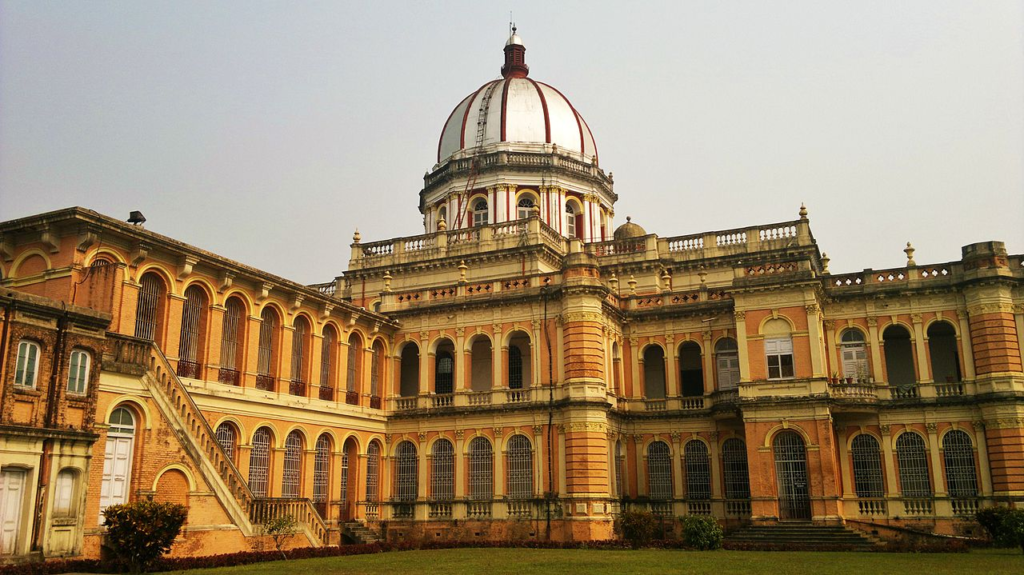
The front façade has been repainted many times over the years. But the rear side of the palace still holds its original 19th‑century colour. This untouched section helps visitors imagine how the building once looked before decades of renovation and maintenance.
Despite the loss caused by the earthquake, the palace remains strong. The repairs preserved its core structure and kept its distinctive style intact. This phase of damage and revival forms an important chapter in the Cooch Behar Rajbari history, showing the resilience of both the monument and its royal guardians.
ASI Preservation, Monument Status, and Museum Collections
The Cooch Behar Rajbari entered a new phase after the princely state joined India in 1949. With accession complete, the palace and its surrounding estate came under the protection of the Government of India. Soon after, the Archaeological Survey of India (ASI) took responsibility for the monument. ASI began structural repairs, conservation work, and long‑term preservation planning.
The palace was later declared a Monument of National Importance. This recognition confirmed its cultural and historical value. It also ensured that the building would receive continuous protection and maintenance under national heritage laws. ASI restored damaged sections, reinforced old brickwork, and preserved the original façade wherever possible.
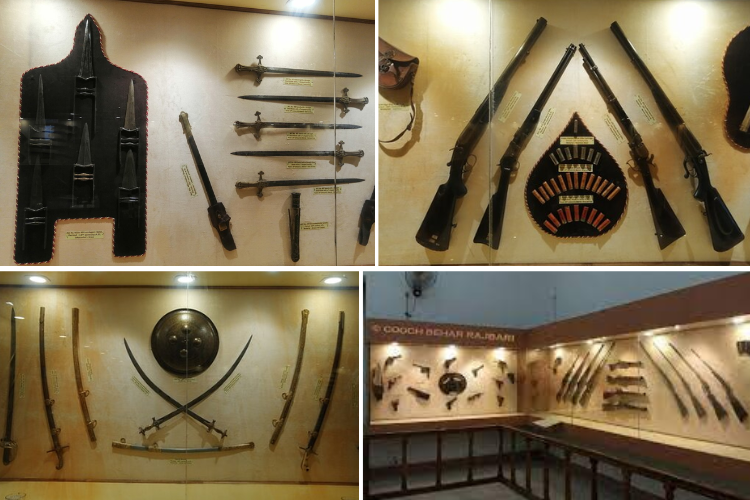
In 2002, ASI converted part of the palace into a museum. This museum displays a wide range of royal artefacts linked to the Koch dynasty. Visitors can see portraits of former rulers, chandeliers, decorative pieces, and paintings from different periods. The museum also preserves royal weapons, which attract significant attention.
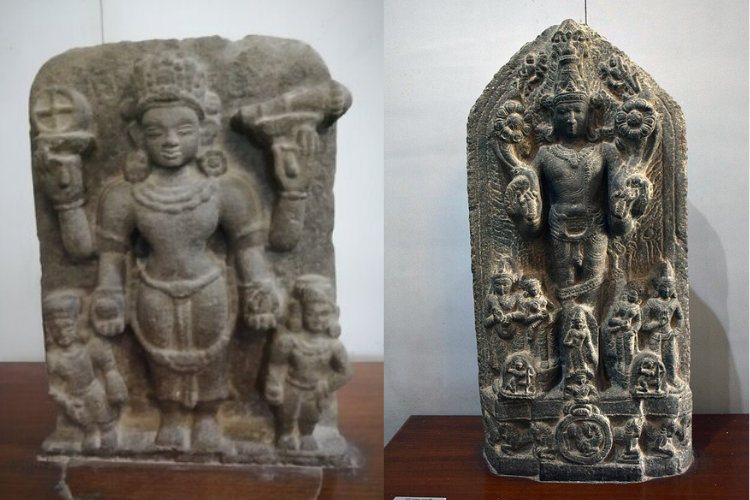
Another highlight is the display of terracotta figurines. These small, ancient sculptures depict various gods, goddesses, and everyday scenes. They offer a rare glimpse into the artistic traditions of earlier centuries. Oil paintings of Koch rulers and members of the royal family add depth to the palace’s story.
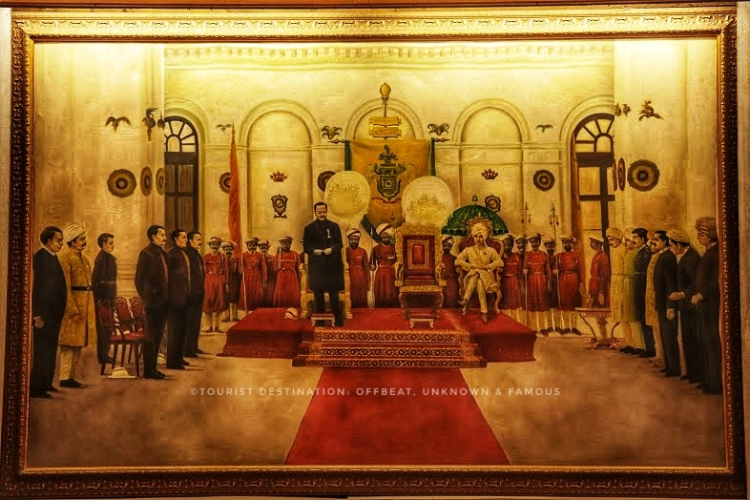
The museum helps visitors understand the life, culture, and legacy of the royal household. It turns the palace from a silent structure into a living historical archive. ASI’s efforts ensure that the heritage of Cooch Behar remains intact for future generations.
Interesting and Lesser‑Known Facts About Cooch Behar Rajbari
The Cooch Behar Rajbari is more than an elegant royal palace. Behind its grand halls and European‑style façade lie several lesser‑known stories that shaped its identity. These facts reveal hidden layers of the palace’s history, architecture, and royal legacy.
Here are some interesting yet lesser-known facts about the Cooch Behar Palace:
1. The Palace Was Inspired by European Royal Architecture
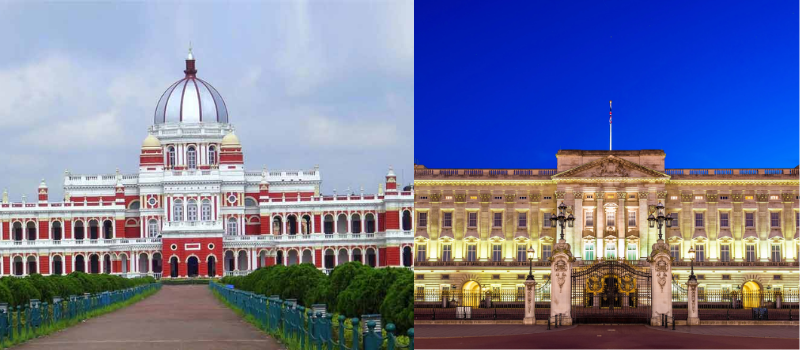
Maharaja Nripendra Narayan admired European palaces during his education in London. Buckingham Palace and other Victorian‑era buildings left a strong impression on him. This influence shaped the design choices of the Rajbari. Architect F. Barckley translated these ideas into a grand Renaissance‑style structure in Bengal. The palace stands today as one of the few full‑scale European‑style royal buildings in eastern India.
2. The Dome Is a Classic Italian Renaissance Feature
The central dome is the palace’s most striking element. Its shape, stepped carvings, and structural style are inspired by Renaissance architecture. European domes often symbolised authority and stability. By adopting this design, Nripendra Narayan projected a modern and confident identity for Koch Bihar. The dome still dominates the skyline of the palace grounds.
3. The 1897 Earthquake Changed the Original Structure
Before the great earthquake of 1897, the Rajbari was a three‑storeyed palace. The tremors destroyed large sections of the upper level. Only two floors were rebuilt during repairs. This changed the palace silhouette permanently. The back façade still retains its old colour, making it the most authentic surviving part of the original building.
4. The Rajbari Became a National Monument After Accession
Cooch Behar joined the Indian Union in 1949. Soon after, the Government of India took over the palace. The Archaeological Survey of India (ASI) began preserving it as a protected heritage site. ASI later declared it a Monument of National Importance. This recognition ensured that the Rajbari would be preserved for future generations.
5. The Palace Museum Holds Rare Royal Artefacts
A part of the palace became a museum in 2002. It displays portraits of Koch rulers, oil paintings, chandeliers, and decorative pieces. Visitors can also see swords, guns, and other weapons used by the royal family. Terracotta figurines showing gods, goddesses, and local art traditions offer insights into the region’s cultural background. These collections make the museum a key attraction inside the Rajbari.
6. Birthplace of Maharani Gayatri Devi of Jaipur
The Rajbari holds a special place in the life of Maharani Gayatri Devi. She was born here into the royal family of Cooch Behar. Her later marriage to Maharaja Sawai Man Singh II of Jaipur created an important royal alliance. She later became a popular political figure and cultural icon. This connection adds another layer of historical depth to the palace.
Frequently Asked Questions About Cooch Behar Palace
The palace was built by Maharaja Nripendra Narayan in 1887. His ideas and European education shaped the design of the building. He wanted a modern and elegant royal residence for the Koch dynasty.
The palace was built to celebrate the Golden Jubilee of Queen Victoria. Because of this, it became popularly known as the Victor Jubilee Palace. The name reflects the close ties between the princely state and the British administration.
The palace originally had three storeys. The 1897 earthquake destroyed much of the upper section. During restoration, only two floors were rebuilt for stability.
The Archaeological Survey of India (ASI) preserves and maintains the palace. ASI also manages the museum inside the building. It ensures long‑term conservation of the structure.
Maharani Gayatri Devi, later the iconic queen of Jaipur, was born in this palace. Her lineage connects Cooch Behar to several major royal families of India. This adds to the Rajbari’s cultural significance.
The museum displays royal paintings, weapons, chandeliers, documents, and terracotta figurines. It also showcases portraits of Koch dynasty rulers. These collections reveal the artistic and cultural heritage of the royal family.
Cooch Behar Palace is 6 kilometers away from New Cooch Behar Junction railway station. It takes about 15 minutes by road. Cooch Behar Airport is also very close, about 5 kilometers from the palace.
Cooch Behar Rajbari is open all 7 days in a week from 10:00 AM till 5:00 PM.
Cooch Behar Rajbari entry fee is Rs. 20/- per person.
You May Also Like
Rani Didda of Kashmir: Power, Politics, and Legacy of a Forgotten Queen

Harshnath Temple, Sikar: The Forgotten Shiva Shrine of Rajasthan
Nalanda University History – The Lost Intellectual Capital of Asia

Historical Value of the Rig Veda as a Source of Early Indian History

History of Delhi: Rise, Destruction, and Rebirth of India’s Eternal Capital
Establishment of the Delhi Sultanate: How a New Era Began in India
The Making of Raigad: The Capital of Chhatrapati Shivaji Maharaj
Rajput Kingdoms: History, Culture, Dynasties and Their Legacy
History of the Maratha Empire: Rise, Expansion, and Fall of a Powerful Confederacy
Diamonds, Spices, and Horses: Global Trade of The Vijayanagara Empire

How Vijayanagara Empire Was Born: History of A Grand Revival