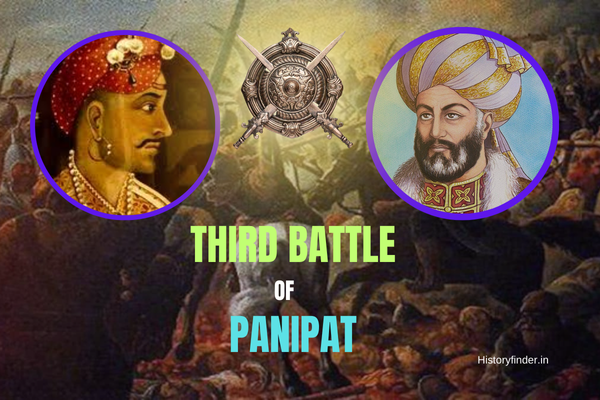
The Third Battle of Panipat was one of the most decisive and tragic battles in Indian history. Fought on 14 January 1761, it marked a turning point for the Maratha Empire, and the political landscape of the subcontinent. The scale of the battle, the number of forces involved, the strategies enforces and the consequences that followed were remarkable for the time.
The battle was not simply a clash of two armies. Rather, the Third Battle of Panipat was the result of shifting alliances, regional rivalries, and competing ambitions across North India. The Marathas entered the battlefield with the dream of establishing their influence over the north. Abdali aimed to reassert his authority and secure Afghan interests.
Understanding the Third Battle of Panipat requires more than recounting who fought and who won. It requires a close look at the causes, miscalculations, leadership decisions, and the broader political context of the 18th century. This battle shaped the future of India for decades and influenced the rise of later powers.
In the following sections, we will explore the background, the buildup to the war, the decisions that shaped the conflict, and the reasons behind the Maratha defeat.
Background and Causes of the Third Battle of Panipat
The Third Battle of Panipat cannot be understood without looking at the political vacuum left by the decline of the Mughal Empire. By the mid‑18th century, Mughal authority had weakened across North India. Regional powers began to assert themselves. The Marathas expanded aggressively from the Deccan into northern territories. Afghan ruler Ahmad Shah Abdali also aimed to extend his influence into the same region. Such competition created tensions which eventually lead to the war.
Maratha Ambition in North India
The Marathas had emerged as the strongest political force in 18th‑century India. Central and western India were already under Maratha authority. By the 1750s, the Marathas held Delhi and pushed into Punjab. The Maratha leadership believed that controlling North India would cement their authority as the next pan‑Indian power. They aimed to check Afghan influence and secure their new northern frontiers. This ambition set the stage for conflict with Abdali.
Abdali’s Concerns and Afghan Interests
Ahmad Shah Abdali feared the rising Maratha presence near regions historically connected to Afghan power. He wanted to protect trade routes, Afghan‑aligned chiefs, and his own sphere of influence. Abdali also saw North India as a source of revenue and prestige. His earlier invasions had weakened Mughal authority, but Maratha expansion threatened to undo Afghan gains. This pushed Abdali toward a decisive campaign.
The Role of North Indian Kingdoms
North Indian Rajput kingdoms, Rohilla chiefs, and various Nawabs became part of the larger political struggle. Many north Indian rulers feared Maratha dominance just as much as Afghan invasion. The Rohillas, led by Najib‑ud‑Daula, sought Abdali’s help against the Marathas. The Marathas, on the other hand, attempted to form alliances but failed to gain widespread local support. This lack of stable partnerships weakened their position before the war even began.
Raghunath Rao Silence
Within the Maratha leadership, Raghunath Rao—an experienced northern commander, who defeated Abdali several times—did not march. He pressed for arrears and political concessions first. Talks stalled. His absence left a large gap in local knowledge and alliances. At the same time, it elimitaed Abdali’s every hesitation to engage into another conflict with the Marathas.
Tensions That Triggered the Conflict
The final trigger came when the Marathas advanced into Punjab and removed Afghan‑aligned governors. This challenged Abdali directly. Communication between the two powers deteriorated. Trust collapsed. Both sides began mobilizing armies. By late 1760, a confrontation had become unavoidable.
The background and causes of the Third Battle of Panipat reveal a conflict shaped by ambition, fear, shifting alliances, and a rapidly changing political landscape.
Buildup to the War and Preparation by Both Sides
After months of rising tension, the Third Battle of Panipat moved closer as both sides prepared for a confrontation they could no longer avoid. The Marathas advanced into North India with a large force. Abdali gathered his allies and marched to defend Afghan influence. Communication between the two sides had already collapsed. By late 1760, both armies were moving toward the plains of Panipat.
Maratha Advance Under Sadashivrao Bhau
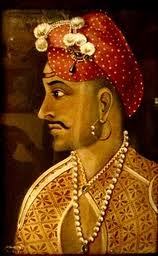
The Maratha army was led by Sadashivrao Bhau, one of the most capable commanders in the empire. He brought with him a massive force and advanced methodically toward Delhi. The Maratha camp included 9,000 infantry lead by Ibrahim Khan Gardi, heavy artillery, and 55,000 cavalry units. Several prominent Maratha leaders made the army look more than battle ready. But 200,000 non-combatants, including pilgrims and the families of soldiers made its movement slow. The Marathas captured Delhi but struggled to gather supplies and local support as they moved north.
Abdali’s Strategic Alliances and Positioning
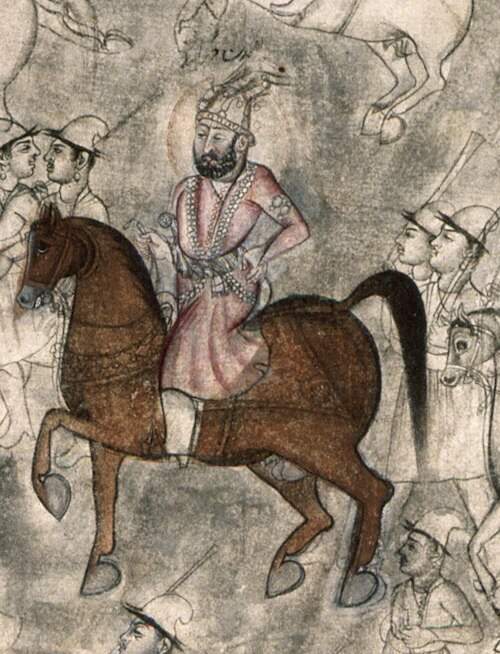
Ahmad Shah Abdali prepared just as carefully with 42,000 cavalry and 2,000 Zamburak (camel gun). He formed alliances with the Rohillas, Najib‑ud‑Daula, and other Afghan‑aligned chiefs and received a handsome support with 32,000 infantry. These alliances strengthened his control over key regions like Doab and the upper Gangetic plain. Abdali’s forces included experienced Afghan cavalry and local auxiliaries who knew the terrain well. He moved quickly, blocked supply routes, and positioned himself to trap the Maratha army.
Blocked Supplies and Harsh Conditions
The Marathas expected support from North Indian rulers, but most refused to help. Some feared the Maratha expansion. Others feared Abdali. This left Bhau’s army isolated. As Abdali’s forces cut off food and resources for almost two months, the Marathas faced shortages. More than 2,65,000 Marathas starved in hunger, and suffered in disease, and dippression. Exhaustion began to affect both soldiers and civilians both physically and mentally in the Maratha camp.
Standoff at Panipat
By the end of 1760, both armies reached Panipat. The Marathas built defensive lines and waited for reinforcements that never arrived. Abdali surrounded them with mobile forces and controlled all supply routes. The armies remained locked in a tense standoff for several weeks. Skirmishes occurred, but neither side launched a full attack. The pressure grew on Bhau’s forces as conditions worsened.
Momentum Shifts Toward Abdali
Abdali’s strategy began to work. His supply lines remained open. The Marathas were trapped behind their own fortifications. Daily survival became a struggle. Attempts to negotiate failed. By January 1761, the Marathas could no longer wait. Their resources were nearly exhausted.
The stage was set for one of the largest and most devastating battles of 18th‑century India.
The Course of the Battle: Key Events and Turning Points
The Third Battle of Panipat began early in the morning on 14 January 1761. Both armies had waited for weeks, and tension had reached its peak. The Marathas, weakened by shortages and long encirclement, decided to break out of their defensive lines. They marched forward with determination, hoping to break Abdali’s formation before noon. The Afghan forces responded quickly and moved into battle positions.
Early Success for the Marathas
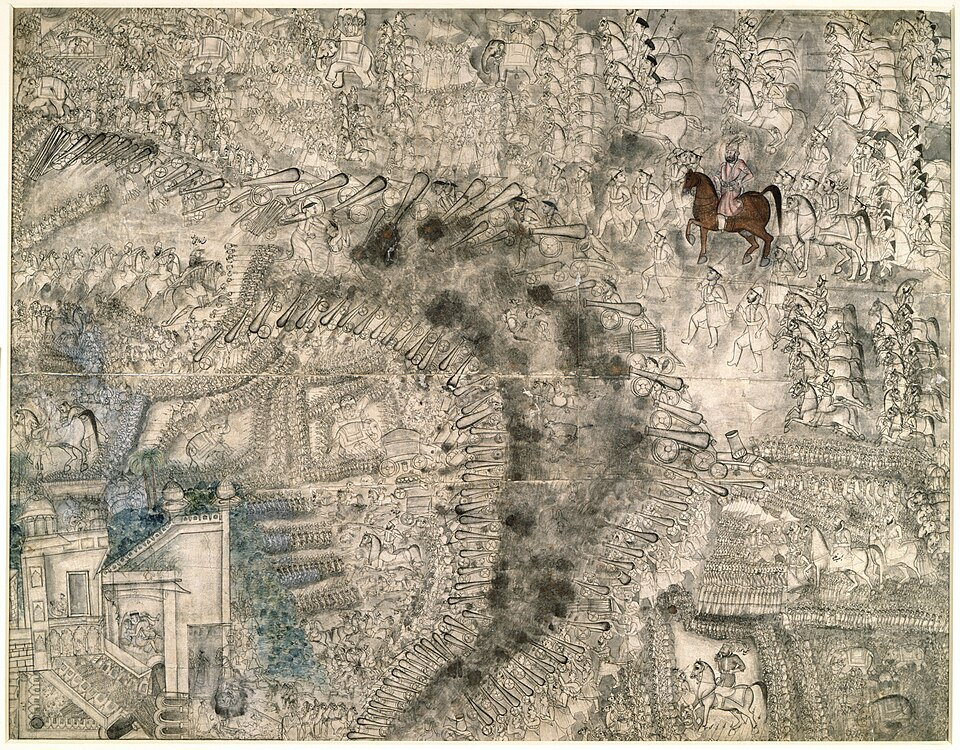
At the start, the Marathas gained ground. Their frontline units pushed back Afghan contingents through coordinated charges. The Maratha infantry, led by Ibrahim Khan Gardi, used disciplined firepower to disrupt Abdali’s ranks. Afghan troops thus suffered early losses. For a brief period, it appeared that the Marathas might turn the battle in their favour.
Abdali’s Counter‑Strategy
Ahmad Shah Abdali adapted quickly. He used his mobile cavalry to attack the Maratha flanks. His horsemen struck in fast waves and retreated before the Marathas could reorganize. Abdali also relied on the Rohilla forces, who pressured the Maratha left wing. This shifted the momentum and created cracks in the Maratha formation. The initial advantage began to disappear.
Collapse of Maratha Supply Wagons
In the midst of the fighting, the Maratha supply wagons were exposed. Afghan forces targeted them and created chaos in the rear. This collapse disrupted communication, ammunition flow, and food distribution. Civilians who had travelled with the Maratha army were caught in the confusion. The disarray weakened the morale of Maratha soldiers already fighting under harsh conditions.
Death of Key Maratha Leaders
Several important Maratha leaders fell during the battle. Vishwasrao, the son of Peshwa Balaji Baji Rao, was killed while leading from the front. His death caused shock within the Maratha ranks. The loss of senior commanders disrupted coordination. Sadashivrao Bhau tried to restore order but faced overwhelming pressure on all sides.
Abdali Gains Full Control
By midday, Abdali’s forces had seized the advantage. His cavalry surrounded the Maratha army and attacked relentlessly. The Marathas continued fighting with bravery but lacked reinforcements, supplies, and clear leadership. Their formation collapsed, and the battle shifted decisively in Abdali’s favour. The Maratha army suffered devastating losses.
The Battle Ends in Defeat
By afternoon, the Third Battle of Panipat had ended in a clear defeat for the Marathas. Thousands lay dead on the battlefield. The Afghan forces held the ground. The defeat marked one of the most tragic days in Maratha history, with consequences that changed the political landscape of India.
Key Factors Behind the Maratha Defeat
A major reason for the Maratha defeat in the Third Battle of Panipat was their poor supply system. The Maratha army travelled far from its home base in the Deccan. This created long and vulnerable supply routes. Abdali’s forces cut off food, water, and resources before the battle even began. Weeks of shortages weakened the morale and strength of the Maratha troops.
Lack of Local Support
The Marathas expected support from North Indian rulers. That support never came. Several Rajput kingdoms remained neutral. The Rohillas and other local powers openly sided with Abdali. Without local alliances, the Marathas struggled to gather supplies, horses, and intelligence. This isolation proved fatal in the final battle.
Raghunath Rao’s Demands and Absence
Raghunath Rao refused to lead without large payments and greater political assurances. Talks failed. He stayed back. The Marathas lost their best‑versed northern strategist, his local alliances, and his knowledge of terrain and routes. It forced Sadashivrao Bhau to command in an unfamiliar theatre.
Tactical Errors and Formation Problems
Sadashivrao Bhau’s strategy relied heavily on defensive camping and heavy artillery. This worked for some time, but it trapped the Maratha forces in one location. When they decided to break out, the army moved in a long, stretched formation. This gave Abdali’s cavalry the chance to strike the flanks. The tactical advantage shifted to the Afghans.
Abdali’s Superior Cavalry Tactics
Ahmad Shah Abdali had one of the fastest and most experienced cavalry forces of the time. His riders used quick charges, sudden retreats, and flank attacks to break enemy formations. The Maratha cavalry was strong but not as effective in open‑field manoeuvres. Abdali’s mobility created gaps that the Marathas could not close.
Loss of Key Commanders During Battle
The death of Vishwasrao in the middle of the battle shocked the Maratha ranks. Command structures weakened. Coordination between infantry, cavalry, and artillery collapsed. Sadashivrao Bhau tried to hold the line but became exhausted in the chaos. As leadership fell apart, the Maratha forces lost direction.
Failure to Secure Resources Before the Battle
Long before the battle day, the Marathas had already suffered serious losses due to hunger and disease. Their large non‑combat population made it even harder to manage resources. Water sources were controlled by the Afghans. Ammunition could not reach the front lines. When the final attack began, the Marathas were already fighting at a disadvantage.
Internal Differences and Slow Decision Making
Differences among Maratha commanders also affected the outcome. Some leaders disagreed with Bhau’s strategies. Others questioned the inclusion of civilians in the march. Slow decision‑making delayed crucial actions. The lack of unity weakened their overall effectiveness.
Abdali’s Alliances and Political Support
Abdali built strong alliances with the Rohillas and other regional powers. Their knowledge of the terrain and local conditions helped him corner the Marathas. This support provided fresh supplies, horses, and manpower. In contrast, the Marathas had no steady allies in the north.
The Third Battle of Panipat was not lost because of a single mistake. It was the result of many interconnected factors—strategic, political, logistical, and personal. Together, they turned the battle into one of the most devastating defeats in Maratha history.
Aftermath and Consequences of the Third Battle of Panipat
The Third Battle of Panipat left the Maratha Empire deeply shaken. Their military losses were enormous. Many senior commanders were killed. Thousands of soldiers never returned home. The psychological impact of the defeat was just as serious. It forced the Marathas to rethink their strategies and ambitions in North India.
Decline of Maratha Influence in the North
After the battle, the Marathas could no longer maintain their northern territories. Their influence in Delhi, Punjab, and the Doab region weakened. Abdali’s temporary victory created a power vacuum. Several regional powers took advantage of the situation. The Marathas withdrew to rebuild in the Deccan, giving up many of the gains they had made in the 1750s.
Abdali’s Victory Without Lasting Control
Although Ahmad Shah Abdali won the battle, he did not gain long‑term control over North India. His forces suffered losses too. Maintaining distant territories proved difficult. Abdali returned to Afghanistan soon after the war. His departure left North India fragmented, with no single dominant power in the region.
The Mughal Empire Continues to Decline
The battle hastened the decline of the already weakened Mughal Empire. The Mughals survived as figureheads, but real authority slipped from their hands. Delhi remained symbolically important, but it had little political power. This decline contributed to the rise of new forces, especially the British East India Company.
Opening the Door for British Expansion
One of the most lasting consequences of the Third Battle of Panipat was the opportunity it created for the British. As Maratha power weakened and Abdali withdrew, the British gained room to expand. They consolidated their control over Bengal, Awadh, and later Delhi. Within decades, they became the dominant power in India.
Social and Emotional Impact on the Marathas
The losses suffered at Panipat left a deep emotional mark on the Marathi-speaking regions. Songs, poems, and oral traditions remember the battle as a day of sorrow. Entire families were affected. The defeat also reshaped Maratha leadership. Later rulers, including younger Peshwas, approached political decisions with greater caution.
The Maratha Revival
Despite the scale of the defeat, the Marathas recovered faster than many expected. Within ten years, they returned to North India and regained influence in Delhi. Leaders like Mahadji Scindia helped restore Maratha authority. This revival showed the resilience of the empire, even after one of the worst defeats in its history.
A Battle That Changed India’s Future
The aftermath of the Third Battle of Panipat influenced India for decades. It reshaped alliances, weakened regional powers, and altered political ambitions. Most importantly, it contributed to the rise of British dominance across the subcontinent. The consequences of Panipat were felt far beyond the battlefield.
Legacy and Historical Significance of the Third Battle of Panipat
The Third Battle of Panipat remains one of the most defining moments in 18th‑century Indian history. It marked the end of Maratha dominance in North India and exposed the fragile political landscape of the time. The battle showed how alliances, ambitions, and regional rivalries could shape the fate of an entire subcontinent. Its consequences were not limited to one empire but affected nearly every major power in India.
A Shift From Indian to Foreign Dominance
The defeat of the Marathas created a power vacuum across North India. No Indian force was strong enough to fill this space immediately. This opened the door for the British East India Company to expand rapidly in the decades that followed. Within a short time, the British became the most influential force in the region. Panipat indirectly paved the way for colonial dominance.
Lessons in Strategy and Statecraft
Historians view Panipat as a lesson in military planning and statecraft. The Marathas had courage and skill, but they lacked alliances, supplies, and unity. Abdali’s victory came from strategy, mobility, and strong partnerships. The battle demonstrated that power in the 18th century required more than bravery. It required diplomacy, logistics, and long‑term planning.
Emotional and Cultural Memory
The battle also left a deep emotional mark on Indian society, especially in Maharashtra. Folk songs, poems, and oral traditions remember Panipat with sorrow and pride. Families who lost leaders and soldiers kept its memory alive for generations. The event became a reminder of sacrifice and the cost of ambition.
A Turning Point in India’s Political Evolution
Panipat was not the end of the Marathas, but it changed the direction of Indian politics. The Marathas revived their influence later, yet their northern ambitions never fully returned. Abdali’s victory also did not translate into long‑term control. Instead, the battle weakened all major Indian and Afghan powers, making room for new forces to rise.
Why Panipat Still Matters Today
The Third Battle of Panipat remains relevant because it explains how India entered a new political era in the late 18th century. It highlights the importance of leadership, preparation, and unity. It also shows how a single battle can reshape history far beyond its immediate outcome.
Interesting Facts About the Third Battle of Panipat
The Third Battle of Panipat is remembered not only for its scale and consequences but also for the many compelling details surrounding it. These insights help us understand the people, strategies, and circumstances that shaped the battle. Below are some of the most interesting facts that deepen our understanding of this historic event.
1. One of the Largest Battles of the 18th Century
The Third Battle of Panipat was one of the largest and bloodiest battles of the 18th century. Tens of thousands of soldiers fought on both sides. The battlefield stretched across a vast plain near the town of Panipat. The scale of the armies, including civilians who travelled with the Maratha camp, made the event even larger. Few other battles of the time matched its sheer size.
2. Ibrahim Khan Gardi’s Infantry Played a Major Role
The disciplined infantry of Ibrahim Khan Gardi helped the Marathas in the early phase of the battle. His units used European‑style formations and muskets to push back Afghan forces. Their steady fire disrupted Abdali’s lines. Many historians believe his troops gave the Marathas their best chance of victory. His role remains one of the most respected aspects of the battle.
3. The Battle Lasted Only a Few Hours
Despite its scale and buildup, the battle itself lasted only a few hours. Once the fighting began, the intensity was overwhelming. Cavalry charges, artillery fire, and hand‑to‑hand combat unfolded rapidly. The outcome was decided before midday. The short duration made the loss even more shocking.
4. Maratha Losses Included Many Prominent Leaders
The Marathas lost several important leaders. Vishwasrao, the Peshwa’s son, was killed in the fighting. Many senior commanders and nobles also fell. Their deaths weakened the empire politically and emotionally. The loss of leadership played a major role in shaping the aftermath.
5. Abdali Honoured the Bravery of His Opponents
Ahmad Shah Abdali respected the courage shown by the Maratha soldiers. Some accounts note that he expressed sorrow over the scale of casualties. He admired the discipline of Ibrahim Khan Gardi’s units. Abdali’s acknowledgment shows the high regard in which Maratha bravery was held, even by their enemies.
6. Civilians Were Present on the Battlefield
The Maratha camp included thousands of non‑combatants. Families, traders, servants, and camp followers had travelled with the army from the Deccan. Their presence added to the chaos when the battle turned. It also increased the human cost. This is one of the most tragic aspects of the event.
7. Panipat Became a Symbol of Heroism and Tragedy in Maharashtra
In Maharashtra, the Third Battle of Panipat became a symbol of sacrifice. Stories of loyalty, bravery, and suffering were passed down through generations. Poems and folk songs remembered the fallen. The event became part of collective memory. It shaped the emotional identity of the region.
8. The Battle Changed the Political Future of India
The outcome of the battle weakened major Indian powers. Abdali did not stay to rule. The Marathas needed time to recover. This created a political vacuum. The British later filled that space, leading to their dominance over most of India.
9. The Marathas Recovered Faster Than Expected
Although the defeat was severe, the Marathas regained strength within a decade. Leaders like Mahadji Scindia rebuilt their influence in North India. They even restored Mughal authority in Delhi. This revival is one of the most remarkable chapters in Maratha history.
10. Panipat Remains a Turning Point in Indian History
The Third Battle of Panipat is remembered not only for its scale but for its consequences. It marked the end of old political patterns. It reshaped alliances and regional ambitions. Most importantly, it set the stage for the rise of a new power—the British.
Conclusion
The Third Battle of Panipat remains one of the most powerful moments in India’s military and political history. Its outcome reshaped the balance of power in the 18th century and exposed the deep fractures within regional politics. The bravery shown on the battlefield, the heavy losses endured, and the far‑reaching consequences that followed continue to make Panipat a subject of reflection and study.
The battle was not just a clash between the Marathas and Abdali. It was a struggle shaped by alliances, ambitions, and decisions that went far beyond the field of war. Its legacy influenced the rise of new forces, especially the British East India Company, and set India on a new historical path.
Remembering Panipat helps us understand the complexity of Indian history. It reminds us that leadership, preparation, unity, and strategy matter as much as courage. Even today, the events of 1761 stand as a lesson in how a single day can change the future of a nation.
Frequently Asked Questions About the Third Battle of Panipat
The Third Battle of Panipat was a major conflict fought on 14 January 1761 between the Maratha Empire and Ahmad Shah Abdali of Afghanistan. It was one of the largest and most consequential battles of the 18th century.
The battle happened due to Maratha expansion into North India, Abdali’s determination to protect Afghan influence, and shifting alliances among North Indian powers. The breakdown between Marathas and regional rulers made conflict inevitable.
The Maratha army was led by Sadashivrao Bhau. Key leaders included Vishwasrao, Malharrao Holkar, and Ibrahim Khan Gardi, whose infantry played a crucial early role.
The Afghan army was led by Ahmad Shah Abdali, also known as Ahmad Shah Durrani, supported by Rohilla chief Najib‑ud‑Daula and Shuja-ud-Daula, the Nawab of Oudh.
The Marathas lost due to choked supply lines, lack of local alliances, Raghunath Rao’s absence, strategic and tactical errors, Abdali’s superior cavalry, and the loss of key commanders during the battle.
The Marathas suffered devastating losses. About 40,000 soldiers and non-combatants were brutally killed by the Afghan army. Maratha influence in North India collapsed. However, Abdali did not stay to rule. The Mughal Empire weakened further, and regional power structures began to shift.
You May Also Like
Rani Didda of Kashmir: Power, Politics, and Legacy of a Forgotten Queen

Harshnath Temple, Sikar: The Forgotten Shiva Shrine of Rajasthan

Nalanda University History – The Lost Intellectual Capital of Asia

Historical Value of the Rig Veda as a Source of Early Indian History

History of Delhi: Rise, Destruction, and Rebirth of India’s Eternal Capital
Establishment of the Delhi Sultanate: How a New Era Began in India
The Making of Raigad: The Capital of Chhatrapati Shivaji Maharaj
Rajput Kingdoms: History, Culture, Dynasties and Their Legacy
History of the Maratha Empire: Rise, Expansion, and Fall of a Powerful Confederacy
Diamonds, Spices, and Horses: Global Trade of The Vijayanagara Empire
How Vijayanagara Empire Was Born: History of A Grand Revival

Chanakya and Nanda Dynasty: Ancient India’s History Changing Strategies

Chandragupta Maurya and Chanakya: Rise of the Mauryan Empire
Ancient Marathwada History – The Untold Trade Routes



Pingback: First battle of Panipat: reasons and consequences - History Finder