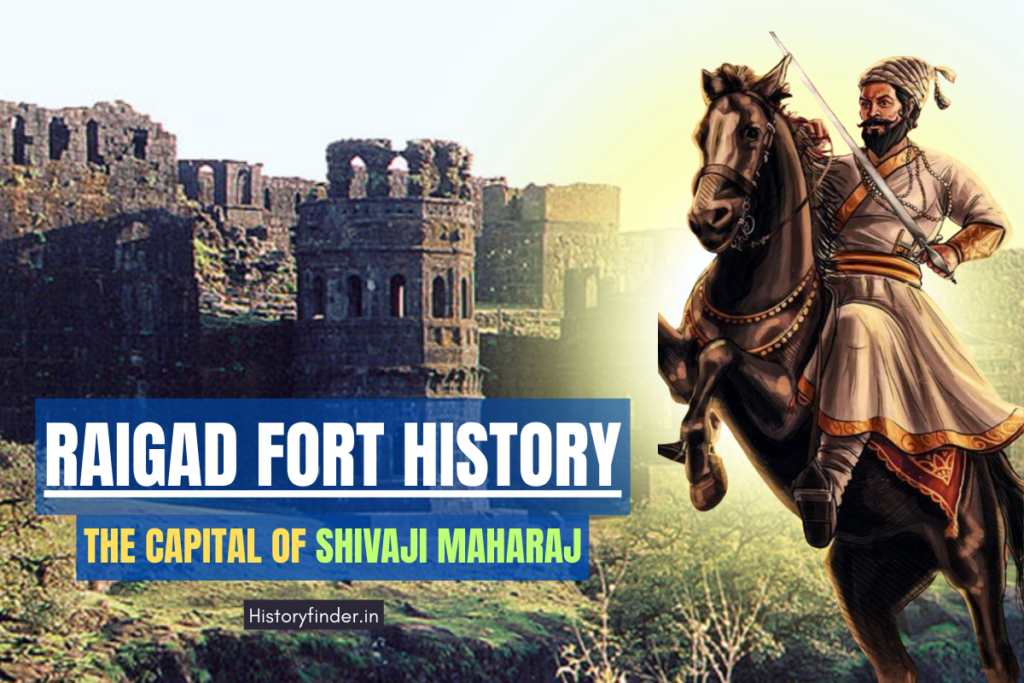
Raigad Fort history reads less like the story of a fort and more like the story of an idea taking shape. High in the Sahyadri mountains, where silence feels deliberate, Chhatrapati Shivaji Maharaj chose Raigad not for grandeur but for purpose. From this isolated plateau, he began building something rare in medieval India—a kingdom governed by discipline, vision, and a deep sense of responsibility toward its people.
For a historian, Raigad is fascinating because it represents a shift in how power was imagined. Many rulers built capitals to impress. But Shivaji Maharaj built Raigad to endure. Every decision he took here—from military strategy to revenue collection, carried the belief that Swarajya was not just to be won, but to be sustained. Standing at Raigad, one can feel that the largest armies or the grandest palaces don’t always shape the history. Rather, often a great leader does pairing his strength and vision.
Geographic Setting and Strategic Vision
The journey to Raigad has always mattered as much as reaching it. As one climbs the winding paths of the Sahyadri ranges, the fort reveals itself slowly, almost deliberately. Local tradition says that Shivaji Maharaj wanted visitors to experience Raigad before entering it, and the terrain still enforces that idea. The mountain demands effort, attention, and respect.
Raigad rises about 820 meters above sea level, standing apart from neighboring hills with a commanding presence. Steep cliffs drop sharply on all sides, while deep valleys cut off easy access. Shivaji Maharaj recognized these features not as natural obstacles but as strategic allies. Oral traditions speak of enemy scouts turning back, defeated by exhaustion and confusion long before they encountered Maratha guards. While folklore naturally embellishes such moments, history confirms the core truth—Raigad offered extraordinary natural defense.
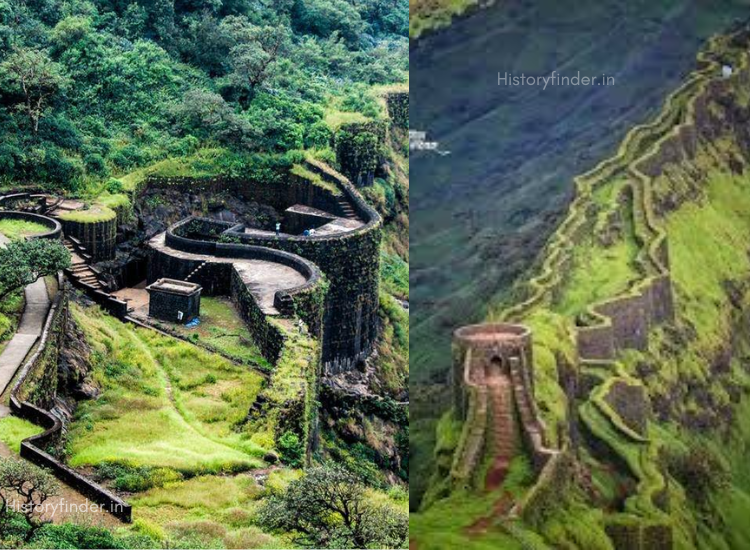
More importantly, Shivaji Maharaj chose Raigad for its balance between isolation and control. The fort lay close enough to the Konkan coast to maintain links with trade routes and naval activity, yet far enough inland to avoid constant imperial scrutiny. From its heights, messengers and signal systems connected Raigad with nearby forts, creating a responsive network across the Deccan. Raigad did not stand alone; it anchored a carefully planned system of movement and communication.
Local memory often describes Raigad as a fort that “tests those who approach it.” Whether legend or lived experience, the idea captures an essential reality. Raigad shaped decisions, slowed enemies, and protected governance. Shivaji Maharaj turned geography into an instrument of rule, proving that Swarajya relied not only on courage and arms, but also on deep understanding of land itself.
Early History: From Rairi to Raigad
Long before Raigad became the heart of the Maratha Empire, people knew this hill as Rairi. At the time, it stood quietly under the control of Chandraraoji More, the ruler of the Jawali region. Like many forts in the Sahyadris, Rairi played a local role, important to its immediate surroundings but not yet central to larger political ambitions.
Shivaji Maharaj saw something more. In 1656, when he captured Rairi, he did not treat it as just another conquered fort. Contemporary records and later Maratha chronicles suggest that he immediately recognized its potential—not merely as a military post, but as a future center of power. This moment marked a turning point in the fort’s destiny.
After taking control, Shivaji Maharaj began reshaping Rairi with purpose. He strengthened its defenses, redesigned its entrances, and planned its internal layout with governance in mind. Administrative spaces, water storage systems, residential areas, and places of worship slowly took form. As the fort transformed, so did its identity. Shivaji Maharaj renamed it Raigad, meaning “the King’s Fort,” a name that reflected both authority and intention.
Local folklore adds a human touch to this transformation. Stories speak of workers, soldiers, and architects laboring under Shivaji Maharaj’s close supervision, guided by the belief that they were not building for a single reign but for generations to come. While such tales carry the warmth of oral memory, history supports the essence of the narrative—Raigad did not rise overnight. It emerged through careful planning, steady effort, and a clear vision of Swarajya’s future.
The Coronation of Chhatrapati Shivaji Maharaj
The coronation at Raigad in 1674 marked a defining moment in Raigad Fort history. By then, Shivaji Maharaj had already built a functioning state through military skill and effective governance. Yet in a political world that valued legitimacy as much as power, formal recognition mattered. The coronation transformed de facto authority into sovereign rule.
As Raigad prepared for the ceremony, the fort became a center of careful planning rather than celebration. Administrators refined procedures, scholars debated ritual correctness, and security remained tight. Moropant Trimbak Pingle, Shivaji Maharaj’s trusted Peshwa, played a crucial role in ensuring that the ceremony met both political and religious expectations. His involvement reflected the seriousness with which Shivaji Maharaj approached kingship—not as a privilege, but as responsibility.
When Shivaji Maharaj finally assumed the title of Chhatrapati, the moment carried quiet gravity. Contemporary accounts suggest restraint rather than display. The ceremony emphasized duty, justice, and service to Swarajya, values that had guided his rule from the beginning.
Among those present was Sambhaji Maharaj, still young, witnessing a moment that would shape his own future. For him, Raigad served not just as a capital but as a place of learning, where kingship revealed its weight as much as its honor.
Historically, the coronation at Raigad asserted indigenous sovereignty at a time of imperial dominance. It signaled that Swarajya had moved beyond resistance and into recognized statehood. In that moment, Raigad Fort became more than a stronghold—it became the symbolic heart of a new political order.
Raigad After Shivaji Maharaj
After Shivaji Maharaj’s death in 1680, Raigad entered a period of uncertainty. His son, Sambhaji Maharaj, inherited not only the throne but also mounting pressure from the Mughal Empire. Raigad remained the Maratha capital, but its security faced constant testing.
Sambhaji Maharaj ruled from Raigad during one of the most challenging phases of Maratha history. Internal dissent, betrayal, and relentless Mughal campaigns strained the fort’s defenses. In 1689, after Sambhaji Maharaj’s capture and execution, Mughal forces under Aurangzeb took control of Raigad.
Despite its fall, Raigad never lost its symbolic power. For the Marathas, the fort represented sovereignty once achieved and worth reclaiming. Later leaders continued to draw inspiration from Raigad’s legacy, even when political control shifted elsewhere.
Raigad’s decline as a capital did not erase its meaning. Instead, it transformed the fort into a symbol of resistance, memory, and unfinished struggle.
Cultural and Historical Legacy of Raigad Fort
Today, Raigad Fort stands in ruins, yet its presence remains powerful. Visitors do not come merely to see stone walls; they come to connect with an idea of leadership rooted in responsibility and restraint. The fort continues to occupy a special place in Maharashtrian cultural memory.
The samadhi of Chhatrapati Shivaji Maharaj, located near the Jagdishwar Temple, draws pilgrims and admirers throughout the year. Its simplicity reflects the values Shivaji Maharaj upheld—discipline, humility, and service to Swarajya.
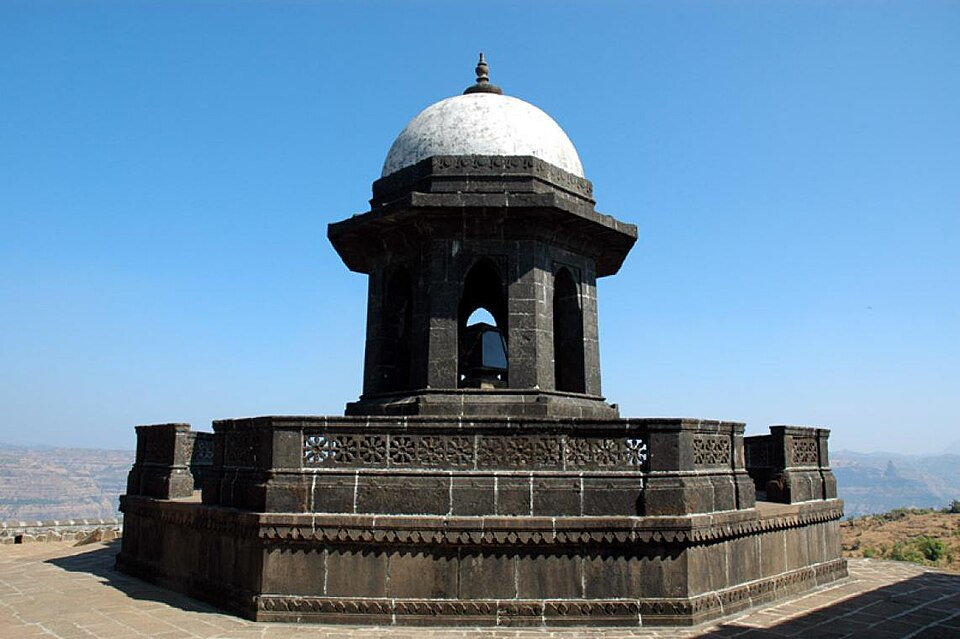
Raigad’s legacy extends beyond monuments. It survives in literature, folklore, public commemorations, and historical scholarship. Each retelling reinforces the belief that Raigad was not just a capital, but a statement of intent.
Even centuries later, Raigad reminds us that history often turns on choices made quietly, with foresight rather than spectacle.
Conclusion
Raigad Fort history is ultimately the story of vision turned into reality. From a quiet hill known as Rairi to the capital of Swarajya, Raigad witnessed the transformation of an idea into a functioning state. Within its walls, Chhatrapati Shivaji Maharaj shaped a model of governance that valued discipline, justice, and foresight as much as military strength.
Even after its political decline, Raigad never faded into obscurity. The fort continued to live on in memory, folklore, and historical consciousness, reminding later generations of what principled leadership could achieve under difficult circumstances. Its ruins speak not of defeat, but of endurance.
Today, Raigad stands as more than a historical site. It represents the belief that power gains meaning only when guided by responsibility. In that sense, Raigad Fort remains relevant—not just as a monument of stone, but as a lasting symbol of leadership and self-rule in Indian history.
Frequently Asked Questions about Raigad Fort History
Raigad Fort is historically important because it served as the capital of the Maratha Empire under Chhatrapati Shivaji Maharaj. It was from Raigad that the foundations of Swarajya were laid, administrative systems were developed, and Shivaji Maharaj was formally crowned as Chhatrapati in 1674.
Raigad Fort originally existed as Rairi Fort, but it was captured and extensively rebuilt by Chhatrapati Shivaji Maharaj in 1656. Under his supervision, the fort was transformed into a well-planned capital suited for governance and defense.
Shivaji Maharaj was crowned as Chhatrapati at Raigad Fort in the year 1674. The coronation marked the formal establishment of the Maratha Empire and asserted sovereign rule in the Deccan.
After Shivaji Maharaj’s death in 1680, Raigad Fort remained the Maratha capital under Sambhaji Maharaj. In 1689, it was captured by the Mughals during Aurangzeb’s Deccan campaign.
Yes, Raigad Fort remains a symbol of Maratha pride and self-rule. It is a protected heritage site and continues to attract historians, devotees, and visitors who wish to understand the legacy of Chhatrapati Shivaji Maharaj.
You May Also Like
Rani Didda of Kashmir: Power, Politics, and Legacy of a Forgotten Queen

Harshnath Temple, Sikar: The Forgotten Shiva Shrine of Rajasthan
Nalanda University History – The Lost Intellectual Capital of Asia

Historical Value of the Rig Veda as a Source of Early Indian History

History of Delhi: Rise, Destruction, and Rebirth of India’s Eternal Capital
Establishment of the Delhi Sultanate: How a New Era Began in India
Rajput Kingdoms: History, Culture, Dynasties and Their Legacy
History of the Maratha Empire: Rise, Expansion, and Fall of a Powerful Confederacy

Diamonds, Spices, and Horses: Global Trade of The Vijayanagara Empire

How Vijayanagara Empire Was Born: History of A Grand Revival

Chanakya and Nanda Dynasty: Ancient India’s History Changing Strategies