History of Bihar

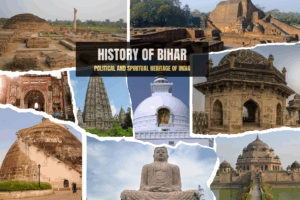
History of Bihar: A Political and Spiritual Heritage of India

Bihar, the state in eastern India, is notable as rich historical and cultural heritage of the nation. The territory had remained a political stronghold for centuries. Bihar also had been a strong contributor in the spiritual history of India, as the birthplace of Buddhism and the place of revival of Jainism. Ancient Buddhist stupas, monasteries and Hindu temples represent Bihar’s cultural significance. In addition, the traces of ancient universities reflect the massive progress of Bihar during ancient ages.
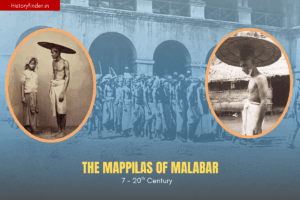
The Moplahs or Mappilas of Malabar coastal region of Kerala India

The Mappilas of Malabar: A Symbolic Blend of India-Arab Cultures

The Moplahs migrated at the Malabar Coast of Kerala during 7th century CE, via the maritime trade relations with Arab countries. Until 16th century CE, the community was recognized in the country as extreley rich and influenetial. But after the rise of Portuguese in the region, the status of the Moplahs declined drastically. The British colonial era had been the toughest period of survival for the Mappilas at Malabar region. They fought their fights of survival for centuries, especially during Portuguese and British era. However, after Freedom of India, the Moplahs got back their old status to some extent. Despite their very long and larges struggles, the Mappilas has always made significant contributions to Kerala’s social, cultural, and economic life.

Portuguese Zamorin Battles

Portuguese Zamorin Battles: Preface of European Colonization

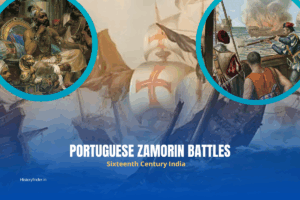
The Portuguese arrival in 1498 led by Vasco da Gama never intended a peaceful trade relation build up. Rather the Portuguese voyage always sought dominance in the Arabian sea. The Portuguese Zamorin battles during early 16th century mark the first sign of European dominance around Indian soil. Undoubtedly, the Portuguese intention was to gain unconditional control over the Malabar coast and the spice trades. Hence, defeating the Zamorin, the supreme authority of the Malabar coast and spice trades, would automatically fulfill their purpose.

The first voyage of Vasco da Gama to India

10 Interesting Facts on First Voyage of Vasco da Gama to India

The arrival of Vasco da Gama in India marks an extremely crucial moment in Indian history. It was the first European sea voyage that successfully reached India, in fact, Asian continent. The first voyage of Vasco da Gama aimed to discover direct sea route to India. But he also intended to set the Portuguese dominance in the Indian subcontinent. Nevertheless, the discovery of a direct sea route between Europe and Asia influenced the global trade quite exceptionally.

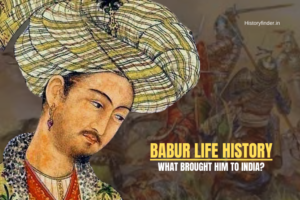
Babur life history: What brought him to India?

Babur Life History: What Brought Him to India?

Zahir ud-din Muhammad Babur is famous in Indian history as the founder of the glorious Mughal empire. Before establishing his empire in India, life story of Babur had been full of struggle and conquest. On one side he had been a remarkable leader and warrior. But on other the side, Babur left an incredible cultural legacy, by promoting Persian art, literature, and architecture in India.

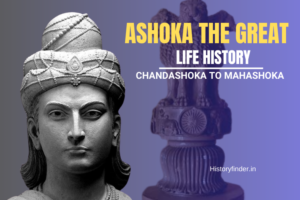
Ashoka the Great ife History: Chandashoka to Mahashoka

Ashoka the Great Life History: Chandashoka to Mahashoka

Emperor Ashoka was the third ruler of the Maurya Dynasty. Ashoka the great life history is often remembered among the great Indian emperors. The third Mauryan king took the Mauryan empire to its zenith. His reign (268-232 BCE) had brought a massive religious transformation in Indian history. Samrat Ashoka the great is widely famous for his many rock and pillar edicts. He was the only king in India, who publicly announced his grievances and renounced armed conquest.

History of Gwalior Gharana - the oldest form of Indian Classical Music

History of Gwalior Gharana: Evolving Indian Classical Music

Gwalior Gharana is one of the oldest and most prominent schools in the history of Indian classical music. Khayal is the oldest form of Indian classical music. Introduction of Gwalior Gharana played a crucial role in shaping the tradition of Khayal singing over a period of time. The typical style of classical signing connects to

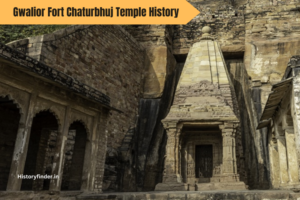
Gwalior Fort Chaturbhuj Temple History - Historyfinder.in

History of Chaturbhuj Temple Gwalior Fort: A Splendid Artwork

Chaturbhuja Temple is a notable Hindu temple inside Gwalior Fort in Madhya Pradesh, India. The medieval age temple sets an astonishing example of Hindu temple art and culture. The entire structure was exquisitely carved from a single stone face. Chaturbhuj Temple is fairly simple in architectural standpoint, but notable for own unique history.

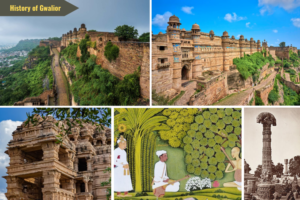
History of Gwalior

History of Gwalior City: Uncovering Few Amazing Facts

Gwalior is a major city and a district of northern Madhya Pradesh in central India. Presently, Gwalior city is one the nine counter magnet cities around NCR. But the history of Gwalior city has even more interesting facts of several centuries, ruled by different monarchy governments. The city also introduced Gwalior Gharana, one of the oldest forms of Indian classical music. Gwalior city is also a famous tourist destination in Madhya Pradesh, India with several historical monuments.

The secrets of Agra Taj Mahal - beyond the love story

The Secrets of Agra Taj Mahal – Beyond The Love Story

Agra Taj Mahal is a mausoleum, an architectural masterpiece and a national heritage monument, situated at the city of Agra in Uttar Pradesh, India. The ivory-white marble made iconic memorial had once glorified the Mughal era, is now a national pride of India. Alongside the legendary love story, Agra Taj Mahal history contains many unknown, yet fascinating facts.

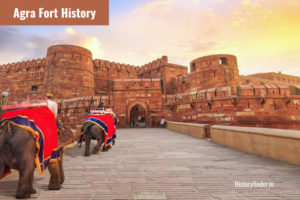
Agra fort history

Agra Fort History: 15 Sublime Facts Worth Knowing

Agra Fort, now a UNESCO World Heritage site, is often regarded for incredible architecture and rich history of the Mughals. But the fort has been occupied by several kingdoms since the 11th century until it went under the Government of India in 1947.

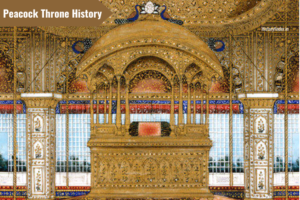
The marvelous Peacock Throne made by Mughal emperor Shah Jahan

Peacock Throne of Shah Jahan: History, Artistry and Legacy

Peacock Throne, the most expensive indegenious throne, was an emblem of Mughal opulence. The lavish decoration of gemstones and jewels on a pure gold architecture, was beyond a poetic imagination. Shah Jahan, the ‘engineer’ sultan, the seeker of ‘paradise on earth’ in his every creation, build his best which nobody could ever match. The glittering

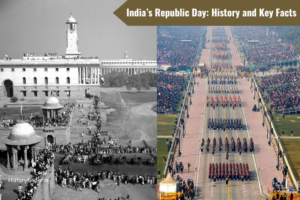
India’s Republic Day: History and Key Facts

Republic Day of India: history and important facts

Republic Day is one of the most important and memorable days in the history of India. India became a republic nation on the 26th January in 1950, when our Constitution came into effect. India’s Republic Day therfore signifies all its struggles for independence and thereafter establishment of a self governing nation. Our Republic Day also showcases the India’s democratic values, cultural richness and unity in diversity. Therefore, Republic Day has an utmost significance in Indian history, politics and culture.

History of Daulatabad Fort, Aurangabad

Daulatabad Fort history | A strategic fort city near Aurangabad

Daulatabad is a medieval age fort city in Auranagbad district of Maharashtra. The fort appears on a 200 metres high conical hilltop and looks very attractive from a distance. But the most interesting part of Daulatabad fort is the architecture, which makes it among the strongest forts of medieval India. Daulatabad fort had probably been the strategic fort of most importance in entire Deccan region during medieval era. Early history of Daulatabad fort dates back to 12th century CE but the hillfort has human footprints since 100 BCE. Therefore Daulatabad fort has always remained an interesting topic for tourists and history explorers.

Qila-e-Ark history | the ruined Mughal pride of Aurangabad

Quila-e-Ark history: the ruined Mughal pride of Aurangabad

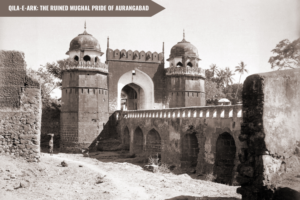
Qila-e-Ark is an historical monument at the historical city of Aurangabad, Maharashtra. Although Aurangabad is extremely rich of historical elements. But the Quila-e-Ark history, has its own distinct importance. Tragically, despite of all historical importance, the 17th century fort palace is now turned into ruins. But the glimpses of imperial Mughal pride in the city of Aurangabad is yet to be overturned.

Ancient Aryavarta: The land of Aryan kings in old age India

Aryavarta refers to the ancient Indian territory, ruled by several Indo-Aryan clans. The ‘land of the Aryans’ roughly points to the north Indian region, where the late Vedic kingdoms had expanded and settled. Seveal ancient Indian Hindu texts have defined the territory of Aryavarta, but in slightly different manner. One reason of it obviuosly the

History of Rajasthan

History of Rajasthan: A Heritage of Royal Cultures

History of Rajasthan is very unique yet very prominent contributor to Indian history, starting from stone age till Rajput and British rule. Rajasthan is a state in north western region of India with fascinating history. The state is famous for its vibrant festivals, majestic forts, stunning palaces, and rich cultural heritage. Ancient Rajasthan or Rajputana was divided into several Rajput Kingdoms. History of Rajput Kings are even more interesting, especially for their matchless bravery, patriotism and royalty. In short, history of Rajasthan represents some fascinating history of Rajput warriors to protect their kingdoms from all external and internal political powers.

Karla Caves History and Architecture

Karla Caves History: The Ancient Buddhist Chaitya of Maharashtra

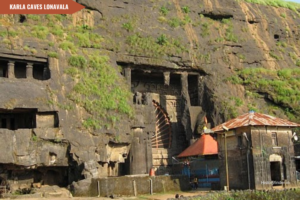
Karla Caves near Lonavala house one of India’s oldest and grandest Buddhist chaityas. This post explores their ancient history, Satavahana patronage, rock‑cut architecture, monks’ residential viharas, sculptures, and the cultural legacy that shaped early Buddhist art in western India.

Bhaja Caves History and Architecture

Bhaja Caves History | Exploring the Oldest Buddhist Marvel

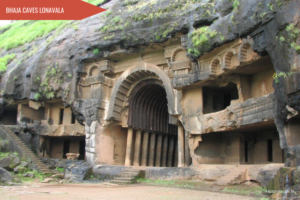
India has more than 1,500 historical sites with amazing ancient rock-cut architecture. Bhaja Caves are recognized amongst the oldest Buddhist caves and cultural heritages in Western India. Built about 2,300 years ago, these caves are among the oldest Buddist schools spreading Buddhism in Maharashtra. Bhaja caves are therefore carrying a remarkable history on spread of Buddhism in Ancient India. Bhaja Caves also count among the top historical tourist destinations near Pune and Lonavala region.

Scroll to Top