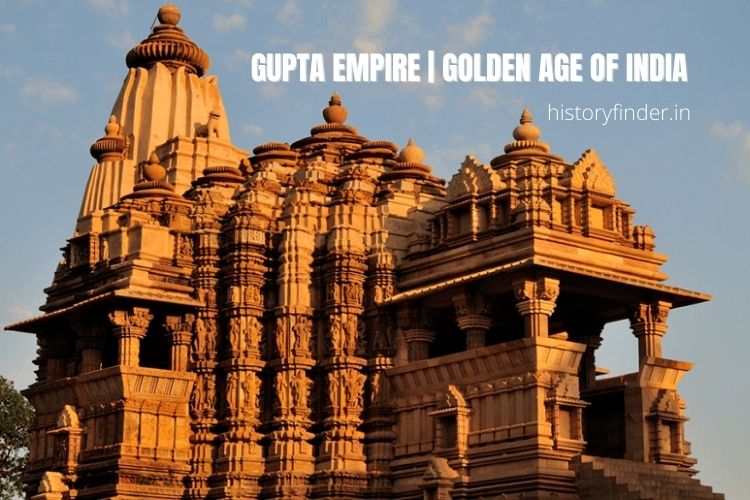
In the 4th century CE, northern India stood politically fragmented. Regional kingdoms competed for dominance. Long-term stability seemed uncertain. Yet from this landscape emerged a dynasty that reshaped the course of Indian history. Gupta Empire history begins at this turning point. What followed was not merely territorial expansion, but the creation of a durable and confident state.
The Gupta rulers combined military strength with administrative clarity. They supported scholars, patronized art, and encouraged intellectual debate. Power, in their vision, required cultural depth. Historians later described this era as the Golden Age of India.
The significance of the Gupta period lies in this convergence. Political order created space for creativity. Economic stability sustained learning. Religious tolerance allowed diverse traditions to flourish.
The Gupta Empire did not simply rule—it set a benchmark. To understand why this era still defines classical Indian civilization, we must first examine how the dynasty rose to power.
History of Gupta empire
Gupta age had a glorious identity in Indian history. The early history of Gupta age lacks enough historical evidence, therefore creates lots of disagreements among the historians. But from the late 3rd century, Gupta empire made an incredible journey until 467 CE, making itself the ‘Classical’ age of Indian history.
Rise of Gupta empire
The Gupta Empire began in the early 4th century CE under Chandragupta I. Few historians, though differ about the foundation of Gupta empire. Many of them credits Sri Gupta, the vassal king under the Kushanas and as the founder of the Gupta Empire. However, before this political rise, northern India had fragmented into smaller kingdoms. Political unity had weakened after the decline of earlier powers such as the Kushans.
Chandragupta I changed the political instability. Through strategic alliances and military strength, he consolidated power in the Magadha region. His marriage to Kumaradevi, a Licchavi princess, strengthened his legitimacy and influence. This alliance was not symbolic. It expanded territory and reinforced authority.
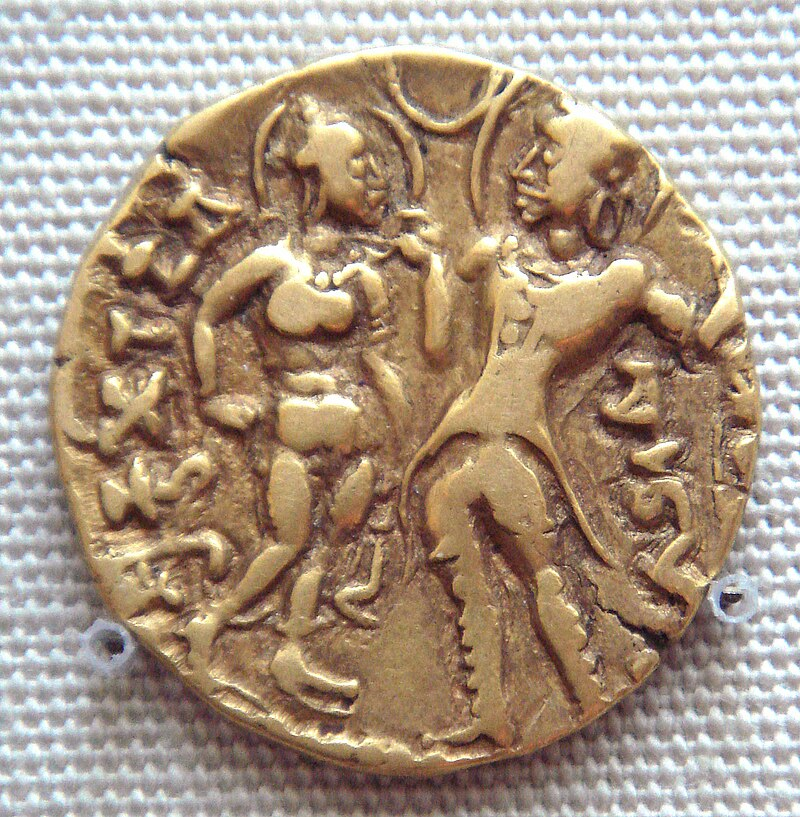
Though Chandragupta I ruled a modest kingdom compared to later Gupta emperors, he laid strong foundations. He established stable administration and secured core territories. His reign prepared the ground for greater expansion under his successor.
Recommended Books:

This book takes a fresh look at this historical period, uncovering insights from the Gupta’s extensive use of coins, especially those made of gold and silver.

This book by Karl Khandalavala revels many hidden facts of Gupta Art, Empire and provice that makes it the Golden Age of India.
Note: We are earn some commission from Amazon when you buy any Amazon product using these links. This will certainly help in maintaining and growing this knowledgeable, historical website.
Samudragupta: The Conqueror King
If Chandragupta I built the base, Samudragupta transformed the Gupta Empire into a dominant force.
Historians often compare him to Napoleon for his military campaigns. The famous Allahabad Pillar inscription, composed by his court poet Harisena, records his victories across northern and central India. Samudragupta defeated rival kings, annexed territories, and forced others into submission.
Yet he did not rule through fear alone. In many cases, he allowed defeated rulers to retain their thrones under Gupta supremacy. This flexible strategy reduced rebellion and maintained stability.
Samudragupta also patronized music and learning. Coins from his reign depict him playing a veena. The image sends a clear message: he valued culture as much as conquest.
Chandragupta II and the Height of the Golden Age
Under Chandragupta II, also known as Vikramaditya, the Gupta Empire reached its cultural peak.
He expanded the empire westward and defeated the Shaka rulers. This victory opened important trade routes and boosted economic growth. Trade flourished with regions as far as Southeast Asia and the Mediterranean.
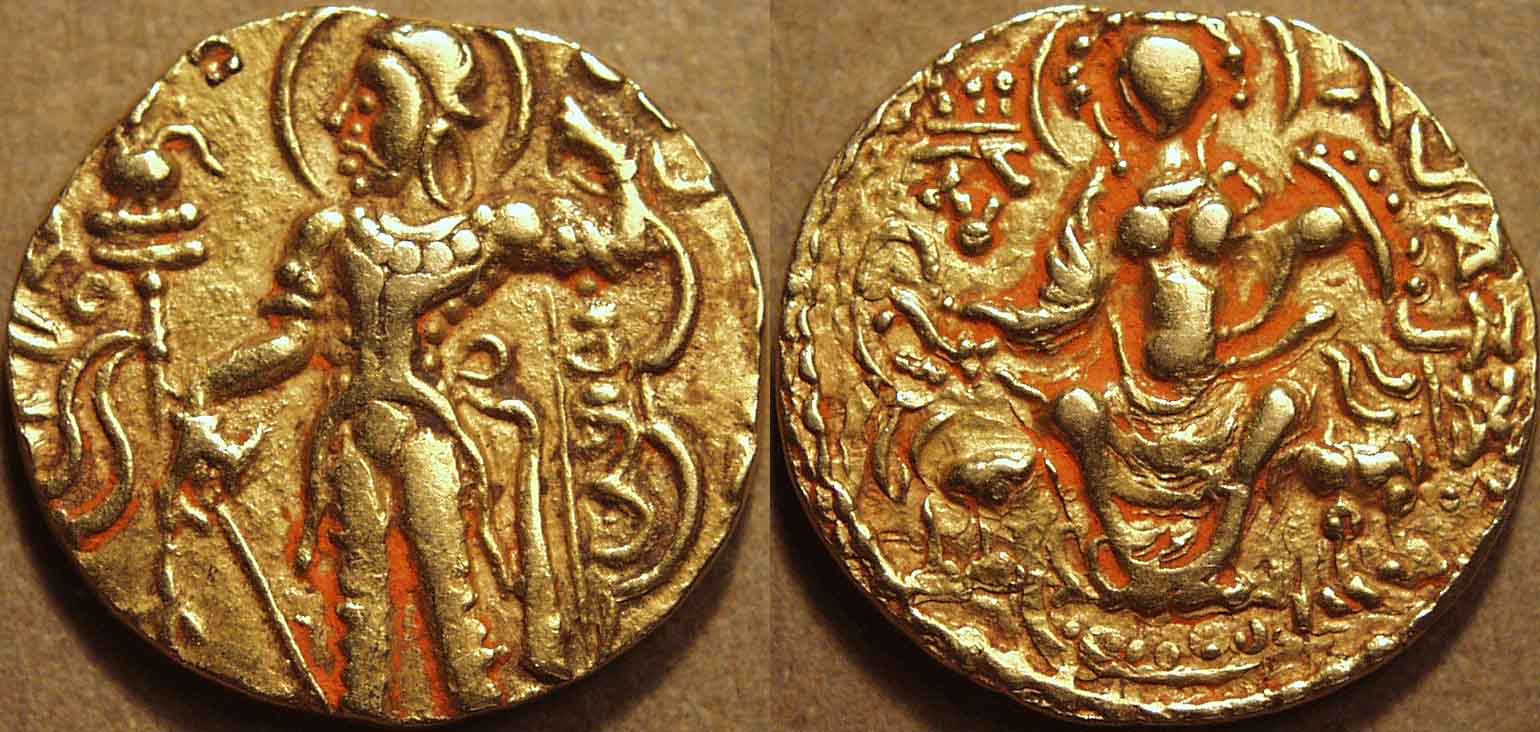
Chandragupta II’s court became famous for its scholars. Tradition speaks of the “Navaratnas” or Nine Gems, including the poet Kalidasa, whose works still influence Indian literature.
During this period, art and architecture matured. Sculptures displayed elegance and balance. Temple design developed new forms that shaped later Hindu architecture. Gupta coinage reflected artistic refinement and economic strength.
This was not merely a powerful empire. It was a confident civilization.
Gupta Administration and Governance
The Gupta kings maintained centralized authority while allowing local autonomy. For administrative ease, the Gupta kings had divided their administration into many provinces, and further into Vishayas. Provinces were governed by appointed officials, often drawn from trusted families. Land revenue formed the backbone of the economy. Fa Hien wrote—people were living peaceful lives under the Gupta administration.
Inscriptions suggest an efficient administrative system. Local councils handled village matters. Trade guilds played a major economic role. This shared structure encouraged both stability and participation.
The Gupta administration did not impose excessive control. Instead, it balanced supervision with flexibility. That balance helped sustain prosperity.
Achievements in Science, Mathematics, and Literature
One reason historians call this era the Golden Age of India lies in its intellectual achievements.
The mathematician Aryabhata, who lived during the Gupta period, advanced the concept of zero and calculated the value of pi with impressive accuracy. Indian numerals evolved during this time, later influencing global mathematics.
In literature, Sanskrit flourished. Kalidasa produced timeless works such as Abhijnanashakuntalam. His poetry reflected both artistic mastery and deep philosophical insight.
In medicine and astronomy, scholars developed new ideas that shaped later traditions. Gupta patronage created an environment where learning could thrive.
Religion and Cultural Harmony
The Gupta rulers supported Hinduism but practiced religious tolerance. Buddhism and Jainism continued to flourish. Temples rose alongside monasteries.
Rather than enforcing uniformity, the empire allowed multiple traditions to coexist. This cultural openness strengthened social stability.
Art from the Gupta period reflects this harmony. Sculptures of Hindu deities, Buddhist figures, and Jain icons share stylistic features, showing a shared artistic vocabulary.
The Decline of the Gupta Empire
No empire remains powerful forever. By the late 5th century CE, the Gupta state began to weaken. Historians mark the death of Gupta King Skandagupta in 467 CE as the beginning of the decline. Internal succession disputes reduced central authority. External invasions by the Huns added pressure.
As regional powers asserted independence, the empire fragmented. By the mid-6th century, Gupta dominance had faded.
Yet decline did not erase achievement. The intellectual and cultural foundations laid during this period continued to influence Indian civilization for centuries.
Conclusion
Gupta Empire history represents more than a chapter in ancient India—it represents a benchmark. The empire combined political strength with cultural brilliance. It nurtured scholars, refined art, and shaped systems of governance that endured beyond its fall.
When historians describe this era as India’s Golden Age, they refer not to myth but to measurable achievement. The Gupta Empire proved that stability, learning, and creativity can flourish together under visionary leadership.
Its legacy still echoes in mathematics, literature, temple architecture, and historical memory.
Frequently Asked Questions on the Gupta Empire History
Historians call the Gupta Empire the Golden Age of India because of its achievements in science, mathematics, literature, and art. During this period, scholars like Aryabhata advanced mathematics, while poets like Kalidasa enriched Sanskrit literature. Political stability also supported economic growth and cultural development.
Samudragupta is often considered the most powerful Gupta ruler. He expanded the empire through strategic military campaigns and strengthened imperial authority across northern and central India. His achievements are recorded in the Allahabad Pillar inscription.
The major achievements of the Gupta Empire include advances in mathematics, astronomy, literature, temple architecture, and administration. The concept of zero developed further during this period. Trade expanded, and Sanskrit literature flourished under royal patronage.
The Gupta Empire began to decline in the late 5th century CE. Internal conflicts weakened central authority, and invasions by the Hunas further destabilized the empire. By the mid-6th century, Gupta political dominance had largely ended.
Gupta Empire history shaped classical Indian civilization. It set standards in governance, art, and intellectual achievement. Its cultural and scientific contributions influenced later dynasties and continued to impact Indian society for centuries.
You May Also Like
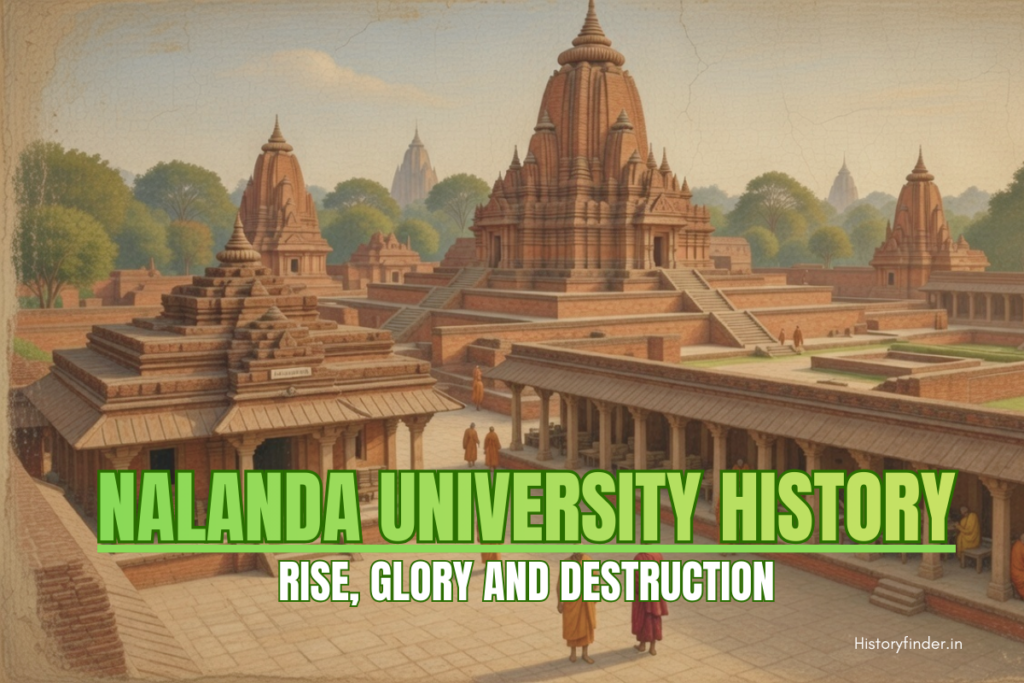
Nalanda University History – The Lost Intellectual Capital of Asia
Historical Value of the Rig Veda as a Source of Early Indian History

History of Delhi: Rise, Destruction, and Rebirth of India’s Eternal Capital
Establishment of the Delhi Sultanate: How a New Era Began in India
The Making of Raigad: The Capital of Chhatrapati Shivaji Maharaj
Rajput Kingdoms: History, Culture, Dynasties and Their Legacy
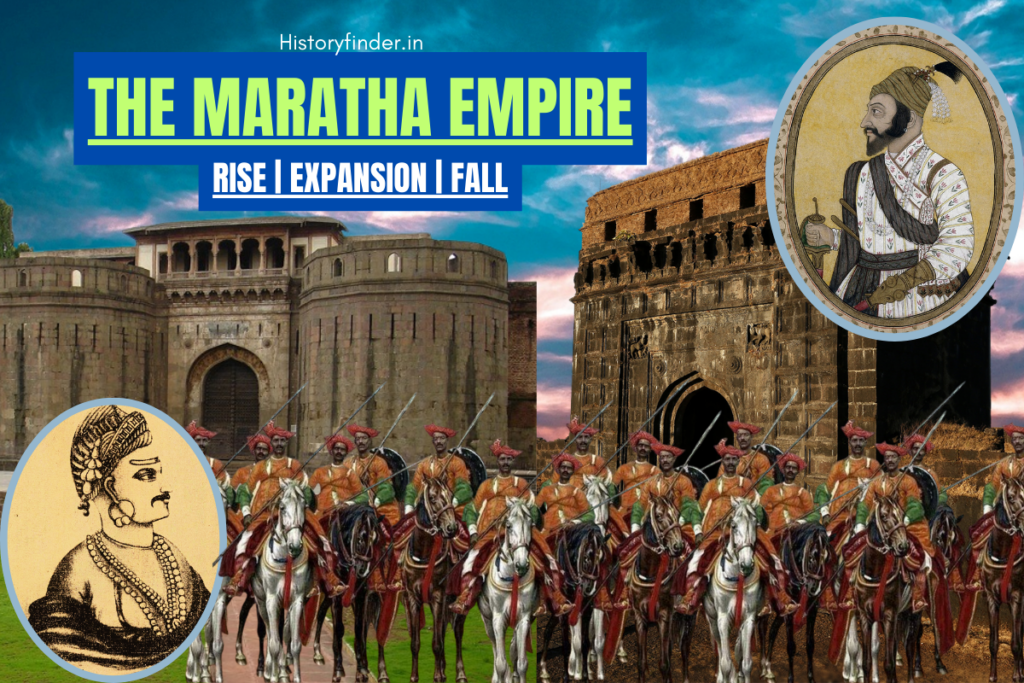
History of the Maratha Empire: Rise, Expansion, and Fall of a Powerful Confederacy
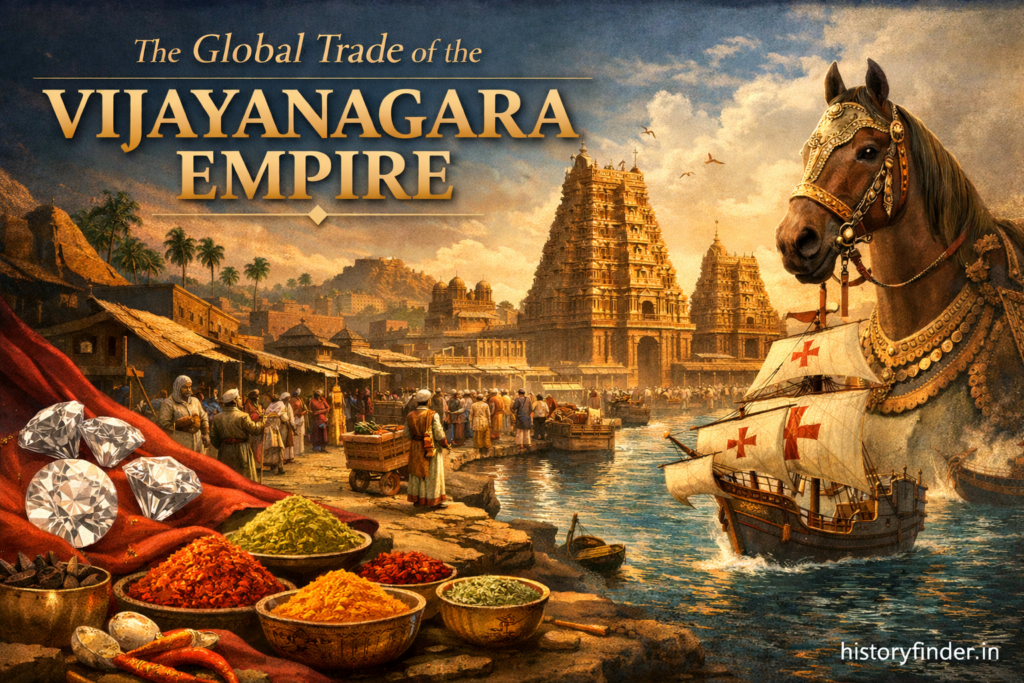
Diamonds, Spices, and Horses: Global Trade of The Vijayanagara Empire
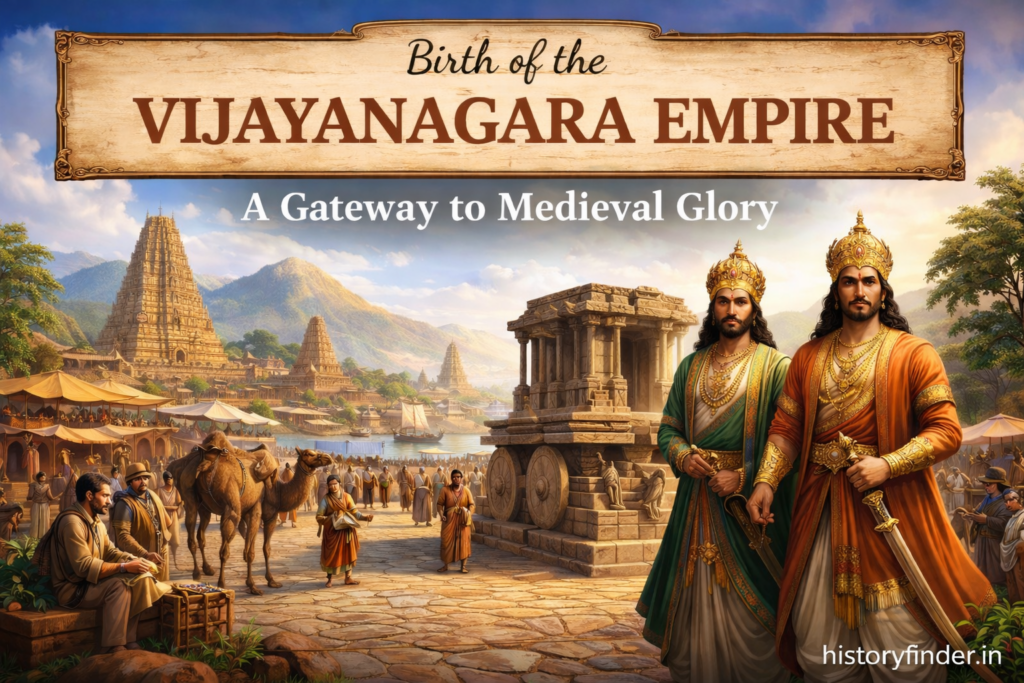
How Vijayanagara Empire Was Born: History of A Grand Revival

Chanakya and Nanda Dynasty: Ancient India’s History Changing Strategies

Chandragupta Maurya and Chanakya: Rise of the Mauryan Empire
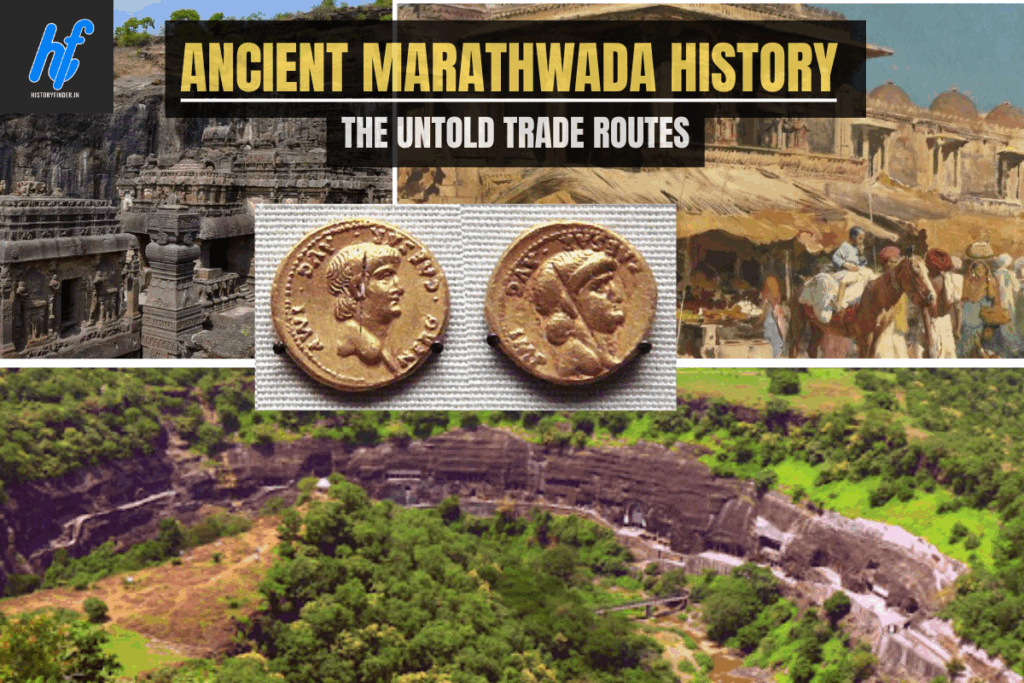


Pingback: Great Stupa of Sanchi: history and architecture - History Finder
Pingback: History of Bengal: Lagacy of Cultures and Literatures - History Finder
Pingback: The ruins of Chandraketugarh in West Bengal - History Finder
Pingback: History of Murshidabad: From Glory to Downfall - History Finder