
India is a country with diversified cultures across the 28 states and 8 union territories. West Bengal, a state of eastern India, is notable for its cultural heritage, stunning natural landscpe and delicious cuisine. The rich history and culture of West Bengal is a perfect amalgam of indigenous traditions mingling with Islamic and western practices. Kolkata, the state capital, is notable as the city of joy for melodious poets and singers, intellectual writers, delicious foods and friendly people.
Modern West Bengal represents the western part of the undivided Bengal, post the partition of India. West Bengal’s rich history lies in its economical prosperity, since the ancient ages. The region was notable for agricultural prevalence and textile artistry, topped with a very strong trade network. But the people of West Bengal are more known for their cultural heritage and intellectual personalities. Bengali food and festivals are cherished by all across the world. Darjeeling tea is world famous for unique flavour and distinct aroma.
Bengali, the language of West Bengal, proudly features in the list of the top 10 most spoken languages in the world. Bengali music, particularly Bengali folks are widely loved in India for emotional depth, connection to rural life and rich cultural heritage. Durga Puja, the most attractive festival of West Bengal, attracts most people gathering. Bengali sweets are famous for unique blend of sweetness and savory flavours, rich textures and cultural significance.
History and Cultural Journey of West Bengal
The cultural journey of West Bengal is a long history from early human settlements transitoning to modern Bengali culture. The culture has adopted many external practices during this journey.
Pre-Historic Age in West Bengal (200,000 – 1500 BCE)
West Bengal saw its first human culture in stone-age settlements. Pre-historic human developed and adpted new culture slowly through several thousand years of transition.
Stone-Age Settlements
The fascinating history of West Bengal began with old stone-age settlements, datable to 200,000 BCE. River valleys of Rarh region were the most dense in stone-age human settlements. Archaeological sites of Kana (42,000 BCE) and Mahadebbera (35,000 BCE) in Purulia district exhibit the oldest stone-age cultures in West Bengal. Himalayan foothills of Kalimpong are also notable for seevral stone-age human settlements. Stone-age discoveries include agricultural and hunting tools from Paleolithic, Mesolithic and Neolithic ages.
Copper-Age Settlements
The river valleys of Rarh region, the south-western West Bengal, is also rich with several copper-age sites. The remains of Pandu Rajar Dhibi is first Chalcolithic site discovered in West Bengal, datable to 1600 BCE. Other Chalcolithic sites of West Bengal include Mahisdal, Bharatpur, Mangalkot and Dihar. Copper-age discoveries include microliths, copper objects, and Black and Red Ware, along with carbonized rice grains.
Iron Age History of West Bengal: Indo-Aryan Migration (1500-350 BCE)
West Bengal missed the influence of original Vedic culture (1500-1000 BCE). The four Vedas have no mention about West Bengal. But Indo-Aryan migration in the region introduced a new cultural era. Later texts like the Dharmasutras, the Puranas and the Ramayana clearly mention about few Iron-age kingdoms like Vanga, Suhma and Pundra.
The likes of Mahabharatas called the pre-residing tribes of coastal Bengal as ‘Mlechchhas’. Other texts pointed another tribal as ‘Dasyus’ or barbers. The new migrants settled in the region but their castism prevailed. A line of separation remained active from these tribes, also treated as the ‘Shudras’.
Ancient Kingdoms in West Bengal (350 BCE-637 CE)
During ancient age, West Bengal went under Nanda empire of Magadha. During Mauryan age, West Bengal advanced rapidly throughly flourished agriculture and trades. Chandragupta Maurya founded Uttarapatha, now Grand Trunk Road, that connected West Bengal to Afghanistan and south-east Asia. Buddhism also thrived in West Bengal during the regime of Ashoka. Tamralipta port emerged as the main seaport and a major center of Buddhism during the period.
After Mauryan decline, Shunga dynasty revived Brahmanism again, including castism.
West Begal remained an essential part of Gupta Empire. The region remained prospered with flourished agriculture, arts, architecture and trades. A hoard of more than 200 Gupta gold coins were found at Kalighat of Kolkata in 1783. Later in 2013, more Samudragupta and Chandragupta-2 era coins were discovered in Murshidabad while widening National Highway 34.
Tamralipta Port too had major links with Gupta empire. The port was connected with the major cities of Gupta era by road. The port city remained a major center of Buddhism. Chinese Buddhhist monk Fa-Hien visited Tamralipta and status of Buddhism is quite evident from his texts.
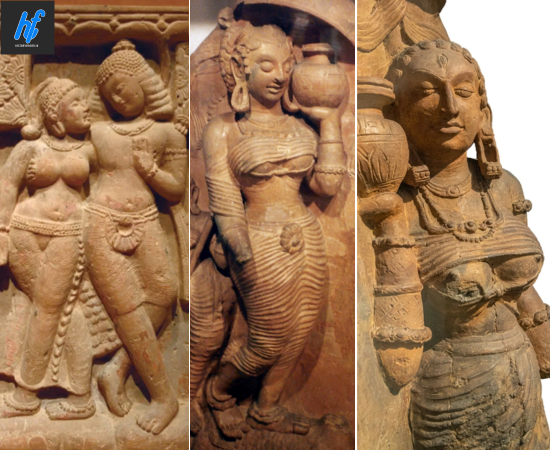
Sanskrit language flourished in Gupta Age literatures which West Bengal adopted with greet. It laid the foundation of Bengali language later on. The region also adopted Gupta iconography in remarkable manner. West Bengal’s temple art, especially idols and sculptures of Hindu gods and goddesses exhibit an exceptional influence from Gupta art. The exquisite terracotta art of West Bengal is another influence of Gupta Age fine art.
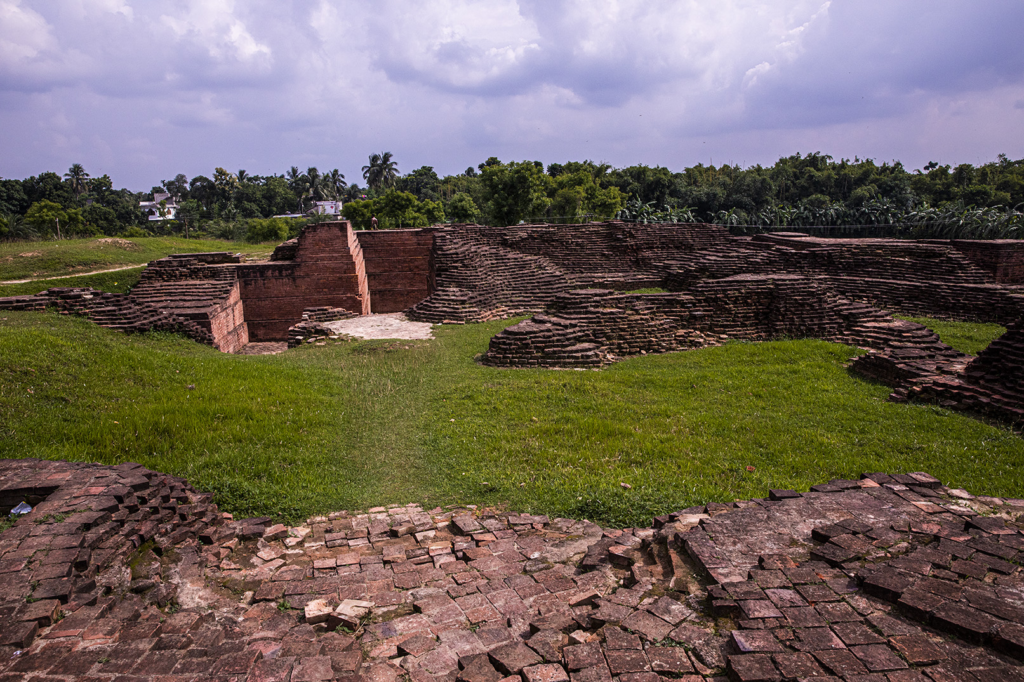
Shashanka established Gauda Kingdom, from weakening Gupta Empire. Gauda became the first independent kingdom in Bengal. King Shashanka made his capital at Karnasubarna in Murshidabad, now carrying the ruins. Shashanka is also notable for introducing new calendar in 595 CE, now followed as Bengali calendar. The language and culture of Gauda culture comprises an incredible legacy into the language and culture of West Bengal.
Early-Medieval History of West Bengal (750-1204 CE)
After 200 years of lawlessness, West Bengal’s culture revived with Pala art, literature and architecture. Pala literature introduced ‘Charyapada’, the first literary form of proto-Bengali language, in Bengal’s culture. Pala kings too, promoted Buddhism in West Bengal. Establishment of Vikramashila, although located in present-day Bhagalpur, Bihar, reflects efforts of the Palas to elevate education system. Glimpses of Pala art and architecture reflected in Temples and Buddhist monasteries. Pala period is thus often reffered as the Golden Age in Bengali history and literature.
Sena dynasty culture emerged in West Bengal during the period of Vijayasena. The religious and social life of West Bengal saw a massive decline of Buddhism and strong revival of Brahminism and Hindu cultures. Ballal Sen made his capital at Nabadwip, now in Nadia district. The ruins of Ballal Dhipi reminds the architectural elegance of Sena period. Bengali literature maintained its height during Sena period as well. Famous Sankrit poet Jayadeva,one of the ‘Pancha Ratnas’ (five gems), belonged to the court of Lakshmana Sena.
Reign of Medieval Sultanates in West Bengal (1204-1574 CE)
Islamic culture began in West Bengal since 13th century, with the establishment of Delhi Sultanate authority. Sufism, especially Sufi saints and their melodious poems started blending with traditional Bengali culture. Mosques, Madrasas and Khanqahs introduced new Islamic art and architecture in West Bengal. Islamic art adopted traditional terracotta art and a perfect blend with Arabic caligraphy to form a new version of Indo-Islamic art and architecture.
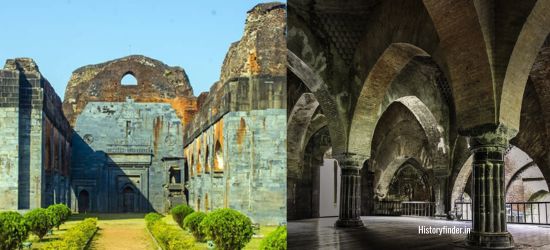
Independent Sultanate reign began since 1342 CE in West Bengal. Islamic culture transformed into integral part of West Bengal’s culture. Adina Mosque and Eklakhi Mausoleum of Malda display fabulous Indo-Islamic art and architecture of Bengal Sultanate. Gaudiya Vaishnavism emerged in West Bengal with Chaintanya Mahaprabhu’s Hare-Krishna bhajan-kirtans.
Fertile lands of West Bengal were high producers of rice and indigo, which had huge demand in Europe. Bengal Sultanate’s economy prospered rapidly through trades. During the Hussain Shahi regime, about 19 mints existed in undivided Bengal. West Bengal became part of one of the most wealthy states in world. Taka became Bengal’s currency in Bengal Sultanate period, derived from Sanskrit term ‘Tanka’.
Early-Modern History of West Bengal (1574-1757 CE)
Baro-Bhuyans (twelve landlords) resisted Mughal expansion in undivided Bengal for several decades (1576-1612). Muslim landlords patronized Bengali language, art and culture, especially Bengali folks.
Mughal influence in West Bengal during the rule of emperor Jahangir. The Mughals brought efficient administration, land management, revenue reforms that boosted agricuture and trade. Bengali silk and cotton textiles also flourished. Perso-Islamic art blended with Bengali-Islamic art. Hazarduari Palace, Katra Mosque, and Imambara architectures reflect Mughal influence in traditional Bengali-Islamic architecture. Mughals administration promoted Urdu and Persian languages alongside traditional Bengali.
High quality textiles, indigo and rice enhanced Eurpopean interest to trade more in the regions. The dutch, danish and Portuguese trading posts were build in West Bengal. The first European factory in West Bengal were made by the Dutch in 1627 at Pipli, now in North 24 Paraganas. The first English factory of West Bengal was built at Hugli in 1651. In 1690, the British East India Company built Calcutta township to increase trade opportunities in West Bengal. Six years later, Fort William was built to fortify the township. Similarly, Danish and Portuguese trading posts were built at Serampore and Chandannagar respectively.
In 1717, the regime of the Nawabs started in West Bengal with Murshid Quli Khan. Ultimately, Siraj ud-Daulah’s defeat to the British at the battle of Plassey, demolished all authorities of the Nawabs in Bengal.
British Company Raj in West Bengal (1757-1857)
In 1699, Bengal Presidency was formed to control the British trades. The presidency eventually took charge of entire jurisdiction of Bengal. Calcutta, the region around the Fort William, became the de-facto capital of Bengal Presidency.
British East India Company imposed a very high tax in Bengal. The Company further forced farmers to produce indigo and opium instead of rice and other grains. This led to severe shortage of grains. A severe drought and exploitative policies of British Company, casued caused the Great Bengal Famine in 1770. The catastrophic event resulted a lifeloss of about 10 million people of West Bengal, Odisha, Jharkhand, Bihar and Bangladesh.
West Bengal’s prosperity in agriculture, textile and other industries, all ruined within a decade. Sucking administration, trade and taxation policies collpsed every industry in West Bengal. East India Company invested their revenues from Bengal to the emerging textile industries in Britain. Jute, Tea, coal mining and shipbuilding industries replaced the traditional industries of West Bengal. In 1838, Calcutta Port was estblished for extensive exports to Britain. Growing industries of Calcutta had prompted East India Company to introduce railways to Bengal in 1854.
Period of Freedom Movements (1857-1947)
In 1857, the 19th Bengal Native Infantry (BNI) regiment sepoys protested against use of pig and cow fat-greased cartridges. The Sepoy’s mutiny soon errupted rapidly, as the peasants, soldiers, princes and zamindars all joined in protest aginst the colonial rule. Although the British Company crushed the rebellions within a year. But the revolt of 1857 had a great historical significance, as it shook the foundation of Company rule. British administration took it very seriously. India’s administration went under dierct control of British Crown.
Indigo farmers protested against British planters during 1859-60, notable as Indigo Revolution in history of Bengal.
Queen Victoria took the title of ‘Empress of India’ in 1877. Calcutta, officially became the Capital of British India. In 1903, the Calcutta Stock Exchange was established.
Social Reformation in Bengal
Until late 19th century, castism, religious discrimination was at highest peak, dominated by upper caste Hindus. Social reformers like Raja Rammohan Roy, Pundit Ishwar Chandra Vidyasagar played major role in reviving Bengal’s social stability. Poets and novelists like Rabindranath Tagore, Bankim Chandra Chattopadhyay, Kazi Nazrul Islam influenced the cultural and social reformation of Bengal extensively. Bengali youths got the modern ideologies through these literatures and novels.
Revolutionary Movements in Bengal
The ‘Vande Mataram’ song by Bankim Chandra had a termendous influence on Bengali youths. Bengali nationlists raised their voice on equal rights and social justice. Under-cover revolutionary groups became active in Dhaka and Calcutta, training Bengali youths in arms and explosives. Outrageous British officers were taken into hit-list. The rising freedom movements forced Lord Curzon declare partition of Bengal on 20th July 1905. This led to the Banga-Bhanga movement in Bengal. Eventually Lord Hardinge had to declare Reunion of Bengal in 1911.
Netaji in Freedom Movements
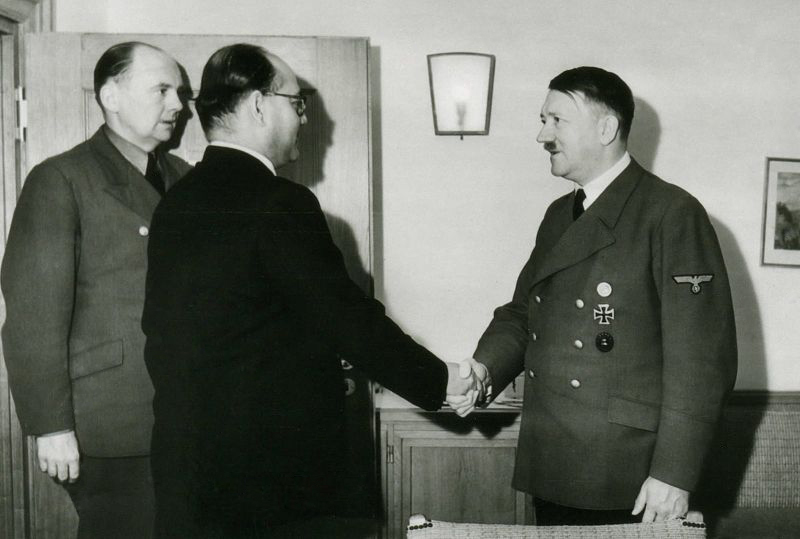
Freedom movements in India reached the peak with emergence of Netaji Subhas Chandra Bose. Between 1923-40, Netaji was involved non-violent freedom movements of India led by Mahatma Gandhi. In 1941 Netaji escaped from house-arrest and met Adolf Hilter for support. Later on December 1941, Netaji Subhash Chandra Bose took charge of the Indian National Army (INA) in Japan. Netaji also declared provisional ‘Azad Hind Goverment’ or ‘Free India’ at Andaman and Nicobar Islands in 1943.
Progress in Science
West Bengal made remarkable progress in science. Jagadish Chandra Bose, Satyendra Nath Bose, Prafulla Chnadra Ray and Meghnad Saha were among the prominent scientists of British West Bengal.
Partition of Bengal
By June of 1947, Mountbatten Plan looked for the partition of India and Pakistan. During primary joint meeting decided (a vote of 120 vs 90) that undivided Bengal will join Dominion of Pakistan. But the separate voting by the legislator of West Bengal decided to join the Dominion of India (58 votes to 21). On the other side, East Bengal chose to join Pakistan.
English Barrister Cyril Radcliffe drew the border lines of India and Pakistan. East Bengal eventually became East Pakistan. In 1971, subject to India-Pakistan War, Indian Army made Pakistan Army surrender in East Pakistan. East Bengal was introduced to the world as a free nation of Bangladesh.
Pingback: Archaeological site of Chandraketugarh in West Bengal - History Finder
Pingback: The ruins of Chandraketugarh in West Bengal - History Finder
Pingback: Gwalior Fort history: from kachhawahas to Scindias - History Finder
Pingback: History of Indian Museum Kolkata - History Finder
Pingback: Cooch Behar Palace history - History Finder
Pingback: Jaisalmer Fort history and bravery of Bhati Rajputs - History Finder
Pingback: Victoria Memorial Kolkata History and Architecture - History Finder
Pingback: Writers' Building Kolkata - History Finder