
Rani Lakshmi Bai was a prominent figure of 19th century in Indian history. She was the Queen of the princely state of Jhansi. Her bravery and patriotism, particularly for the defense of Jhansi, inspired countless people to join the independence movements in India. The warrior queen of Jhansi was one of the iconic leaders of the Indian Rebellion of 1857. The legacy of Rani Lakshmi Bai remains a symbol of courage, resistance, and patriotism.
Rani Lakshmi Bai was perhaps the only Indian lady fighter whom even the British admired. British general Sir Hugh Rose quoted Rani Lakshmi Bai as: “remarkable for her beauty, cleverness, perseverance (and) generosity to her subordinates. These qualities, combined with her rank, rendered her most dangerous of all the rebel leaders.”
The legacy of Rani Lakshmi Bai also symbolize the modern women’s empowerment, sacrifice and relentless struggles in India. Statues of Rani Lakshmi Bai riding a war horse and carrying her son represent both resistance and caringness of a woman.
Rani Lakshmi Bai Biography in Brief
No major records about Rani Lakshmi Bai biography is available, especially her life before marriage.
On 19th November, 1828, Rani Lakshmi Bai born to a Marathi Brahmin family at Varanasi. Few historical accounts claim that she was born in 1835, which is practically unlikely. Bhagirathi Sapre, the mother of Rani Lakshmi Bai, died at her very young age. Moropant Tambe, the father of Rani Lakshmi Bai, worked under the Peshwa at Bithur.
Lakshmi Bai got married at the age of 14 years, to Maharaja Gangadhar Rao of Jhasi in 1842. Lakhmi was not her original name. She was renamed to Lakshmi Bai after her marriage only.
Legacy of Rani Lakshmi Bai of Jhansi: 10 Must Know Facts
Rani Lakshmi Bai had left a great legacy behind her. It is not just about encouragements for modern Indian women. But it is also about solidifying the definace mindset against the mightiest evil power. The legacy of Rani Laxmi Bai is also an emblem of strong patriotism, irrespective of any gender. These 8 facts about Rani Lakshmi Bai represent her inflexibility to freedom.
1. Born as Manikarnika Tambe
The real name of Rani Lakshmi Bai was Manikarnika Tambe. She was named after the famous Manikarnika ghat of Varanasi. Raja Gangadhar Rao of Jhansi married her in 1842. Name alteration was a common practice then for women after marriage. Manikarnika was renamed as Lashmi Bai after her marriage with the Raja of Jhansi.
2. Excelling in Warfare
Moropant Tambe worked for Peshwa Baji Rao II. Young Manikarnika brought up at the household of Peshwa. Her childhood playmates included Nana Sahib and Tatya Tope. There she excelled in martial art, swordsmanship, archery, and other warfare skills. In fact, she learnt using firearms too. Her wafare skills later reflected in her strong resistance against the British during the Rebellion of 1857.
3. Death of Only Child
The world knows more about her adopted child Damodar Rao. But Raja Gangadhar Rao and Rani Lakshmi Bai gave birth to a son. In fact, the son was named Damodar Rao. Unfortunately, the Damodar Rao died at a very young age, within a few months of his birth. Few historical accounts describe that he was poisoned.
On his deathbed, Raja Gangadhar Rao and Rani Lakshmi Bai adopted a son. They named the boy after their dead son, Damodar Rao. The reason to adopt Damodar Rao was to avoid the British Doctrine of Lapse policy. It allowed the British to annex any Indian princely state that lacked a direct male heir.
4. Main Apni Jhansi Nahin Doongi
Death of Maharaja Gangadhar Rao in 1853 had immensely insecured the future of Jhansi. The British refused to recognise their adopted son Damodar Rao. According to the British Doctrine of Lapse policy on the state. But Rani Lakshmi Bai refused to surrender her Jhansi to the British. She prepared her army for battle with the mighty British army. Her war cry, “Main apni Jhansi nahin doongi!” roared across the nation. The words had a simple meaning – I will not surrender my Jhansi. But it carried immense weightage of defiance, patriotism and legacy of Rani Lakshmi bai.
5. Leadership of Rani Lakshmi Bai
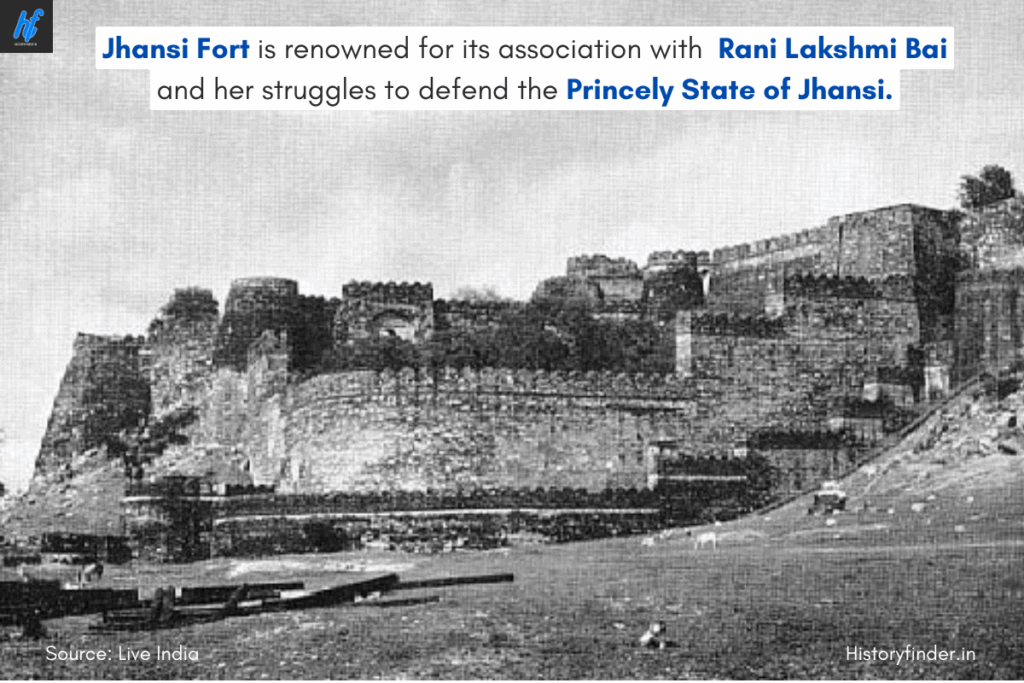
Rani Lakshmi Bai represent the women in leadership roles. It was rare until the mid of 19th century in India’s history. She took command of her 12,000 soldiers to protect the fort and city of Jhansi. Her impressive leadreship capabilities reflected during the siege of Jhansi led by Sir Hugh Rose in 1858. The British troop desparately wanted to capture the strategic fort of Jhansi to mitigate the ongoing Rebellion of 1857. Support from Tatya Tope proved insignificant. She lacked heavy artillery what the British had. Her soldiers lacked modern warfare training. But the struggles of Rani Lakshmi Bai to defend the fort of Jhansi was commendable.
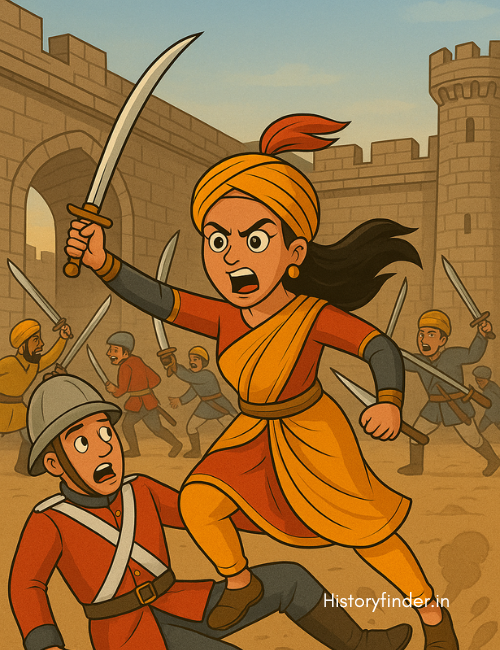
She personally led assaults to disturb the British heavy gun firing. But that was never enough. Consistant firing from larger cannons breached the fort ramparts in few days. Rani Lakshmi Bai and her struggles of nearly two weeks could not defend Jhansi. But the leadership capabilities of Rani Lakshmi Bai was exposed including the British.
6. Rani Lakshmi Bai Escape History
The fort entrances and ramparts were already compromised. British soldiers invaded deep inside the fort. It was not easy for her to leave Jhansi. But the strategic thought behind the history of Rani Lakshmi Bai escape from Jhansi Fort was ‘live today and fight tomorrow’. Eventually she escaped from Jhansi on the night of 4th April, 1858. Rani Lakshmi Bai refuged to Kalpi with her son Damodar Rao.

The famous legend of Jhalkari Bai is deeply associated with the escape story of Rani Lakshmi Bai. Jhalkari Bai disguised herself as the Queen of Jhansi. She kept the British soldiers engaged in fight. It allowed Rani Lakshmi Bai a safe passage to escape with her son. The British men took time to realise the truth. They tortured her to the utmost brutality. But Jhalkari Bai never revealed any secret about Rani Lakshmi Bai. Jhalkari died on 5th April, 1858, after suffering extreme pain.
7. Built a Female Regiment
Rani Lakshmi Bai did not just rely on male soldiers. She believed even female can contribute when motherland is in cricis. She encouraged and trained a significanly large group of women in swordsmanship, archery, and horseback riding. They fought alongside men to defend Jhansi. Jhalkari Bai was one of her advisor and a reliable female soldier in the women’s regiment of Rani Lakshmi Bai.

8. Resistance at Kalpi
The warrior queen escaped from Jhansi and refuged at Kalpi. Her short stay at Kalpi marks her further uprise and second battle against the British. She joined the forces of Tatya Tope there. Quickly they made allies with local rebel leaders. But despite all efforts, the mostly unskilled rebel forces proved much incompetent to the expert British combatants. Sir Hugh Rose reached Kalpi on 22nd May 1858 and defeated the forces of Rani Lakshmi Bai and Tatya Tope.
9. Capture of Gwalior Fort
Defeat at Kalpi forced Rani of Jhansi to retreat. In June 1858, she captured the strategic Gwalior Fort with her allies. She raised the flag of Jhansi over the ramparts of Gwalior Fort. The warrior queen of Jhansi declared her stand for the independence of India. Unfortunately, the battle of Gwalior remained the final triumph of Rani Lakshmi Bai before her death.
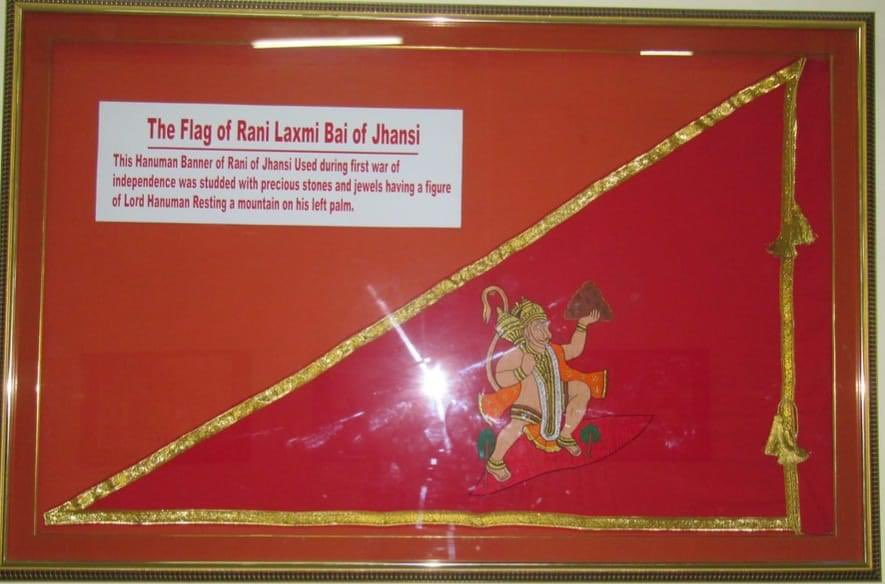
The flag of Jhansi featured a depiction of Lord Hanuman carrying a mountain on his left palm. Now the Museum of Jhansi preserves one piece of it.
10. Fight Till the Death
The Battle of Kotah-ki-Serai (17–18th June, 1858) is famous for last battle of Lakshmi Bai. She was the most concerning figure for the British. Governor Lord Canning had announced a bounty of 20,000 rupees who captures Rani Lakshmi Bai. British accounts described her fearlessness, how she stormed into enemy lines with sword in hand.
Rani Lakshmi Bai of Jhansi had suffered several wounds during her final battle. But she continued her fight. Few legend accounts state that she ordered her loyal attendants to burn her body. She did not want the British to capture her body – dead or alive.
Inspiration to the Indian Freedom Movements
Her name has fueled many women to fight for justice. Rani Lakshmi Bai remained an eye opener that navigated social establishment of women as leaders. The story of Rani Lakshmi Bai refleted in poems, folklores and plays during 20th century to inspire the youth. Leaders like Mahatma Gandhi, Subhas Chandra Bose, and Bal Gangadhar Tilak often used her name to examplify pride of independence.
Legacy of the warrior queen of Jhansi made immense impact on India’s freedom struggles. On 12th July, 1943, Netaji Subhash Chandra Bose formed an all-women regiment within the Indian National Army. Netaji named the first women regiment of INA as the Rani of Jhansi regiment.