The Surat raids of Shivaji Maharaj unleash two of his bold and strategic military expeditions. These campaigns showcase his brilliance in guerrilla warfare. Surat was a thriving commercial hub of the mighty Mughal empire then. Shivaji Maharaj chose to raid Surat, not just for wealth, but also as a symbolic target to assert Maratha power. Both of his raids featured precision strikes and then swift retreats. The Surat raids of Shivaji Maharaj marked a turning point in the rise of Maratha resistance against imperial dominance.
Shivaji Maharaj raided the Mughal port city of Surat first time in 1664 and then again in 1670. His campaigns sent shockwaves through the Mughal court.
The Surat raids yielded vast wealths to Shivaji Maharaj. The acquired wealths proved useful in military expansion and fortifying the key strongholds. Eventually, these two raids had greater significance in consolidating the foundation of the emerging Maratha Empire.
Background
By the early 1660s, Shivaji Maharaj had firmly established himself as a rising Maratha power in the Deccan. His guerrilla tactics, strong fort network, and grassroots support had already alarmed the Mughals. This led a long clash for three years between Shivaji Maharaj and the Mughal Nawab Shaista Khan of Deccan. As a result, his financial condition was quickly deteriorating. Shivaji Maharaj badly needed a large amount of wealth to fund his campaigns.
Mughal forces caused enough devastation around Poona, Nashik and Raigad. Three years of plunder had to be resettled. Also his naval troop needed strenghtening.
Since the middle of 1663, the spies started observing the Mughal posts Mughal territories between Poona and Burhanpur. They needed a weaker Mughal post for a swift but precise attack. The intelligence revealed Surat had a Mughal fort. But the defense of the city is quite manageable for a surprise attack. And also the port city possessed enough wealth through trades and tax collections. These reasons was enough for Shivaji Maharaj to plan his first raid to Surat.
First Raid of Surat
Chhatrapati Shivaji Maharaj was strategical to plant his troops in different locations but close to Surat. Certainly it marks the smart thinking from the great Maratha warrior. Small troop movements can easily escape from opposition’s surveillance. Shivaji Maharaj himself left from Nashik. On 5th January 1664, all the Maratha troops met at Gandevi, about 54 kilometers south from Surat.
The first Surat campaign of Chhatrapati Shivaji was not a mere, savage raid. On 6th January, Shivaji Maharaj deliberately sent message to Mughal governor Inayat Khan. He wanted Khan to appear at the Maratha tent with three of Surat’s richest merchants – Haji Zahid Beg, Virji Vora, and Haji Qasim. Which means, until then it was a daring fund raiser attempt from Shivaji Maharaj from the Mughal governor.
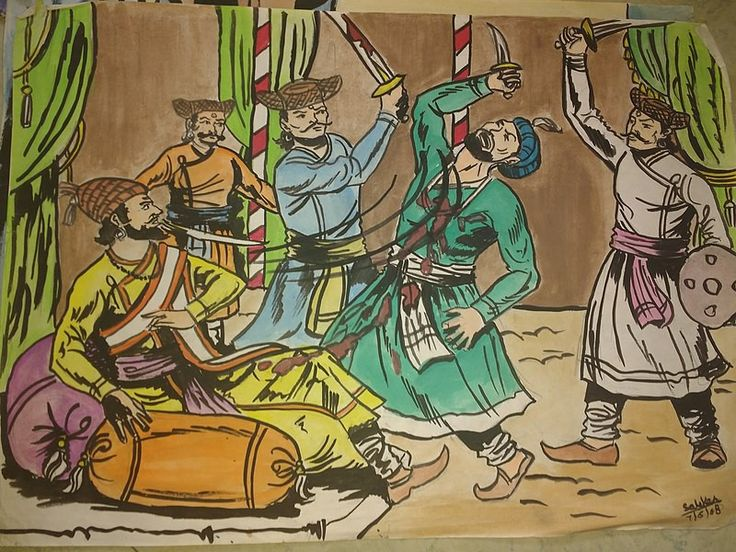
The deliberation went for two days. But no sign from Inayat Khan to comply the demands of Shivaji Maharaj. His lapses of organising the city’s defense were already exposed during the deliberation. In fact, Inayat Khan send an officer to assassiante Shiavji Maharaj. His officer went into Shivaji’s tent pretending to negotiate the surrender of Suart fort. But the Mughal officer tried to kill Shivaji with a dagger. Maratha gurads intervened quickly and severed the attacker’s hands.
Shivaji Maharaj eventually ordered a general sack of Surat. The city remained under Maratha attack for three days (8-10 January, 1664). But no unnecessary killings were attempted. No religious establishments and civilians were harmed either. Maratha army systematically looted wealth from affluent merchants, foreign trading houses and the Mughal treasury. Mughal establishments were blazed into fire. The seized wealths from Surat included cash currency, gold, silver, pearls etc. The total collection was estimated more than 10 million rupees.
The Aftermath of First Sack of Surat
Shivaji Maharaj acted swiftly to leave the city. Mughal reinforcements reached Surat the next day. Surat was only left with heaps of clothes and invaluables. Shivaji Maharaj took all the valuables of Surat to his capital at Raigad.
The sack of Surat of 1664 was not a mere, tactical victory for Shivaji Maharaj. It was a serious humiliation to Aurangzeb and his imperial prestige. He knew very well that Aurangzeb will not hold back for too long. Shivaji Maharaj thus emphasised quick fortification of Raigad. He also built the formidible sea fort Sindhudurg at Malwan.
This took the Maratha Mughal rivalry to the top gear. Furious Aurangzeb dispatched his general Jai Singh to confront Shivaji. Surrendering 23 forts to the Mughals and the treaty of Purandar was a massive set back for Shivaji Maharaj. It paused his advancements for next few years.
Second Raid of Surat (1670)
The prolonged battles with Mughals resulted financial crisis. It was the time to replenish the Maratha treasury. Surat remained the easiest access in terms of defense and distance. In June 1670, Shivaji Maharaj was captured Mahuli, a mere 270 kilometers southwards from Surat. The city of Surat began shivering from the nightmares of 1664. The British factory officials already called a small troop from Bombay. But Shivaji Maharaj was waiting for the final confirmation from his spies.
On 3rd October, 1670, the 15,000 cavalry of Shivaji Maharaj stormed into Surat. Inayat Khan refuged into Surat fort, leaving the city undefended. Maratha army plundered the city on 3-5 October. Houses of affluent merchants, warehouses were the primary targets. About one-third portion of the city were burnt. Coins, gold, silver, pearls and precious textiles were looted. The second Surat campaign of Shivaji Maharaj acquired wealth estimated about 6.6 million rupees.
But Shivaji Maharaj again was firm with his code of conduct. His diplomacy was still intact during invasion. Maratha forces spared the British and Dutch factories completely. No religious institutions, civilians were under attack despite being wealthy.
Aurangzeb quickly dispatched commander Daud Khan Qureshi for Surat. But Shivaji successfully moved the siezed wealth to his stronghold location. Aurangzeb was furious and humiliated with the second raid at Surat. Inayat Khan was reprimanded at the Mughal court.
Controversy over Surat Raids: Genoside or Mere Loot?
Some individuals, including political figures, have portrayed the Surat raids purely as acts of genoside. While historical records suggest genuine efforts to spare the innocents. Then who is right? What Shivaji Maharaj actually intended? Yes, it is true that two-third of Surat burnt for three days. But it important to know who were not and why?
Shivaji Maharaj completely spared Mohandas Pareikh and his family business. He was reputed employee of Dutch East India Company. Then why Shivaji Maharaj spared Mohandas? Just because he was aware that Mohandas was a reputed chariatable person, doing enough for the poor regularly. The kind hearted Maratha king knew how to honour these kind hearted people.
Shivaji Maharaj also did not touch the foreign missionaries. It is amazing that despite seeing the British and Portuguese armies are up against him, Shivaji still spared the missionaries. Was it an act of Genoside? Certainly NOT!! It was rather a perfect act of religious tolerance and secularism.
Takeaways
The Treaty of Purandar of 1665 forced Shivaji Maharaj surrender 23 forts to the Mughals under pressure. His second campaign of Surat in 1670 marks his committment reclaim the lost. It was not just an effort to replenish the Maratha war-fund. The Surat raid was a massive assault on Mughal arrogance. Apparently, these two Surat raids by Shivaji Maharaj largely highlighted the vulnerability of the Mughal empire.
The accumulation of 6.6 million rupees proved crucial during reclaim of the 23 forts lost to the Mughals.
The Surat raids boosted Shivaji’s reputation as a formidable military leader. Colonial historians like Sarkar often analyzed these raids as a focus on military success and Mughal decline. But nationalist and modern historians like Sardesai and Pagdi portrayed them as integral to Shivaji’s vision of Maratha independence. Across the board, however, the raids are seen as strategic, symbolic, and transformative acts in Indian history.