
Agra Taj Mahal is among the few monuments in the world that touches the soul. The ivory-white structure is not just a mere combo of marble and stone. But a centuries old inspiration for historians, poets, travelers, and of course – for the lovers. The glorifying history of Taj Mahal dates back to the Mughal era, perfectly blending romance, politics, art and architecture.
Agra Taj Mahal is a mausoleum, an architectural masterpiece and a national heritage. Millions visit every year, makes the best Mughal architecture of Agra among the most photographed monuments in India.
Everyone knows the love story of Shah Jahan and Mumtaz Mahal. But very few know the secrets — the forgotten facts of Agra Taj Mahal. This content intends to cover the complete history of Agra Taj Mahal, from the eyes of an history seeker.
In 1983, UNESCO recognized the Agra Taj Mahal as the World Heritage Site. It is admired as “the jewel of Muslim art in India”. But at the same time, pollution and overcrowding is now a threat to the Indian heritage.
The Historical Background of Taj Mahal, India
The historical background of Taj Mahal India dates back to 1631. It was the reign of Mughal Emperor Shah Jahan. His love for art, architecture, and refinement was fenomenal. The era of Shah Jahan is hence often marked as “the Golden Age of Mughal Empire”. Nevertheless, Shah Jahan was completely devastated with the demise of his beloved wife, Mumtaz Mahal. His soul thus waved — to showcase his eternal love in a different way.
Ustad Ahmad Lahori, the chief architect of Mughal empire, was summoned. The idea was to build a monument that is completely unique in the world.
Shah Jahan chose the seren location of Yamuna river bank for construction of Taj Mahal.
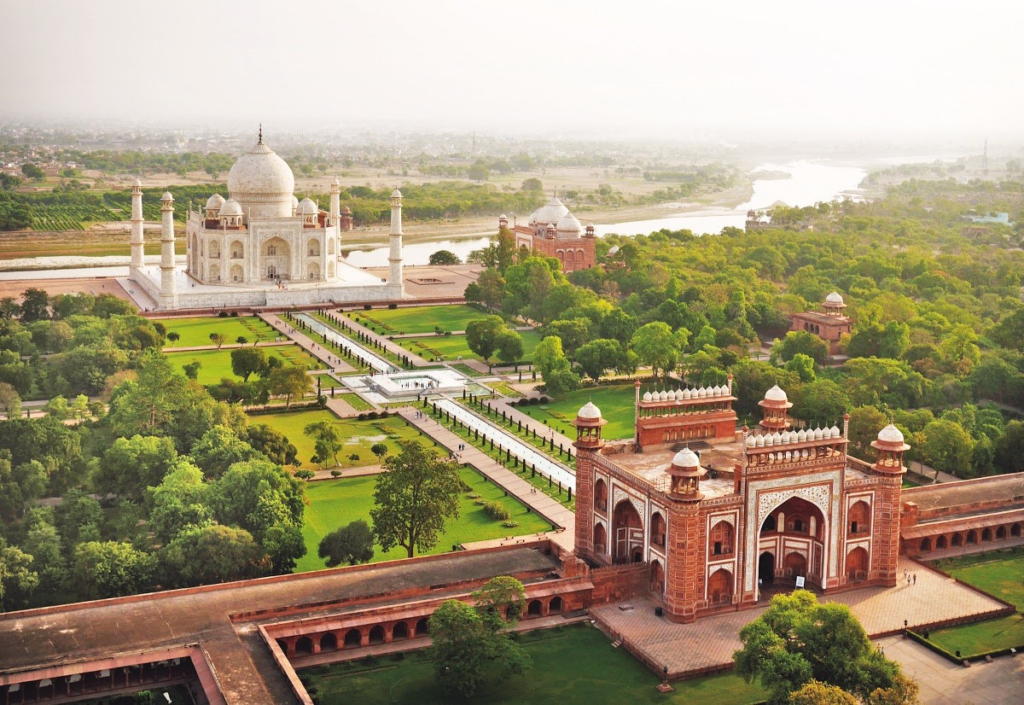
Construction began in 1632 and continued for more than two decades. Thousands and Hindu artisans, calligraphers, and architects were engaged alongside the Mughals. The construction cost of Agra Taj Mahal crossed 5 million Mughal Rupees — about INR 80 billion (US$ 1 billion) in present values.
Taj Mahal Construction Timeline and Facts
Shah Jahan himself laid the foundation of Agra Taj Mahal. The Taj Mahal construction timeline and facts reveal a remarkable feat of engineering of its time. The materials for Taj Mahal construction were sourced from across India and Asia. White marbles were brought from Makrana in Rajasthan. While jasper came from Punjab, turquoise from Tibet, lapis lazuli from Afghanistan, and sapphires from Sri Lanka.
Key milestones in the Taj Mahal history and architecture details include:
About 20,000 workers worked day in and out to complete this Mughal architecture Taj Mahal masterpiece. It tooks them 22 years to build the one of the greatest architectural marvel in Indian history.
The Story of Shah Jahan and Mumtaz Mahal
The story of Shah Jahan and Mumtaz Mahal centres the Taj Mahal historical significance. Mumtaz Mahal, born Arjumand Banu Begum, was not only the emperor’s wife but also his confidante and advisor. Prince Khurram (Shah Jahan) met Mumtaz Mahal in 1607. He was only 15 then while she was 14. However, the marriage of Shah Jahan and Mumtaz Mahal took place in 1612, fixed by Mughal saints.
Mumtaz accompanied Shah Jahan even on during travels, even on military campaigns. Her counsel influenced many imperial decisions of Mughal empire.
Mumtaz Mahal died in 1631 at Burhanpur, while giving birth to their 14th child, during a campaign. It was a daughter. Shah Jahan was inconsolable on the death of Mumtaz Mahal. He went into mourning. Mughal chroniclers wrote of his grief as — “a wound that time could not heal”. The Taj Mahal story is therefore not just a tale of stone and marble, but of enduring human emotion.
When Mumtaz Mahal’s body was shifted to the Taj Mahal?
The body of Mumtaz Mahal was initially buried at at Burhanpur. While the construction of Taj Mahal was in progress, Shah Jahan decided to bring her body to Agra. Her body was then in a small domed structure within the Taj Mahal complex while the construction was in progress.
After the mausoleum structure was completed in 1643, Mumtaz Mahal was finally buried in Taj Mahal. The exact date of her final burial, however, is not mentioned in any historical records.
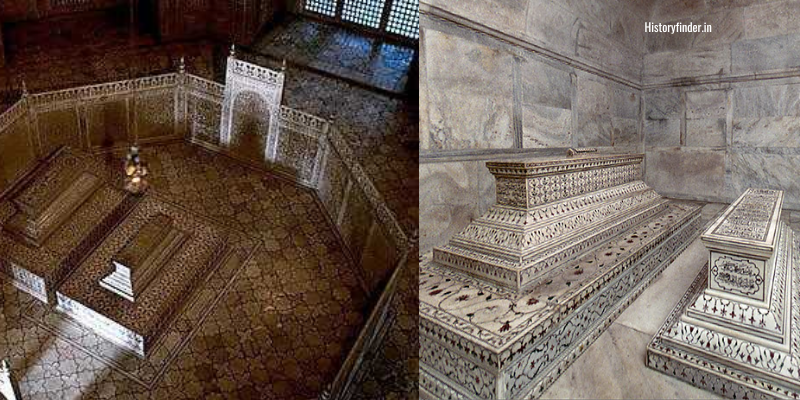
Later, Shah Jahan was also buried beside his beloved wife. Agra Taj Mahal houses two sets of cenotaphs of Mumtaz Mahal and Shah Jahan. The flase pair is kept at the main hall, while the original cenotaphs are at the basement. The reason behind such plan is simple — protection from invading enemies.
Architecture and Design of Taj Mahal Agra
The architecture and design of Taj Mahal Agra reflect the pinnacle of Mughal architecture — a harmonious blend of Persian, Indian, and Islamic influences. The symmetrical plan features a central dome, four minarets, and a perfect balance of gardens and water channels, symbolizing paradise as described in Islamic texts.
Every detail was carefully crafted — from the calligraphy of Quranic verses on the entrance to the inlaid floral motifs on the marble walls. The Taj Mahal historical facts for tourists often highlight the optical illusions in its design:
Taj Mahal as a UNESCO Heritage Site
In 1983, World Heritage Committee declared the Agra Taj Mahal UNESCO world heritage site. The fab Mughal architecture was recognized as “the jewel of Muslim art in India and one of the universally admired masterpieces of the world’s heritage.” This status further enhance the Taj Mahal cultural and historical significance in world history.
Millions visit each year to witness this Agra Mughal monument, making it one of the most visited and studied heritage sites in the world.
Secrets of Taj Mahal History and Design
Shah Jahan had a master plan to make their lover story immortal to the world. But since left incomlete, the secrets of Taj Mahal history and design are known to very few. The other side of Yamuna still houses the incomplete foundations. It was a perfect plan to build a black marble twin across the Yamuna — a mausoleum for Shah Jahan himself. Imagine one black and one white marble twin mausoleums across Yamuna.
Had Aurangzeb allowed to finish the dream of Shah Jahan, the twin Taj Mahal would have been the reality today.
Taj Mahal Historical Facts and Tourist Insights
Here are some Taj Mahal historical facts for tourists and researchers:
- One of the most visited sites in India, attracting over 6 million visitors annually.
- The complex includes a mosque and a guesthouse.
- The marble changes color with the light — pink in the morning, white in the afternoon, golden at night.
- Calligraphy on the gateway increases in size from bottom to top, creating an optical illusion of uniformity.
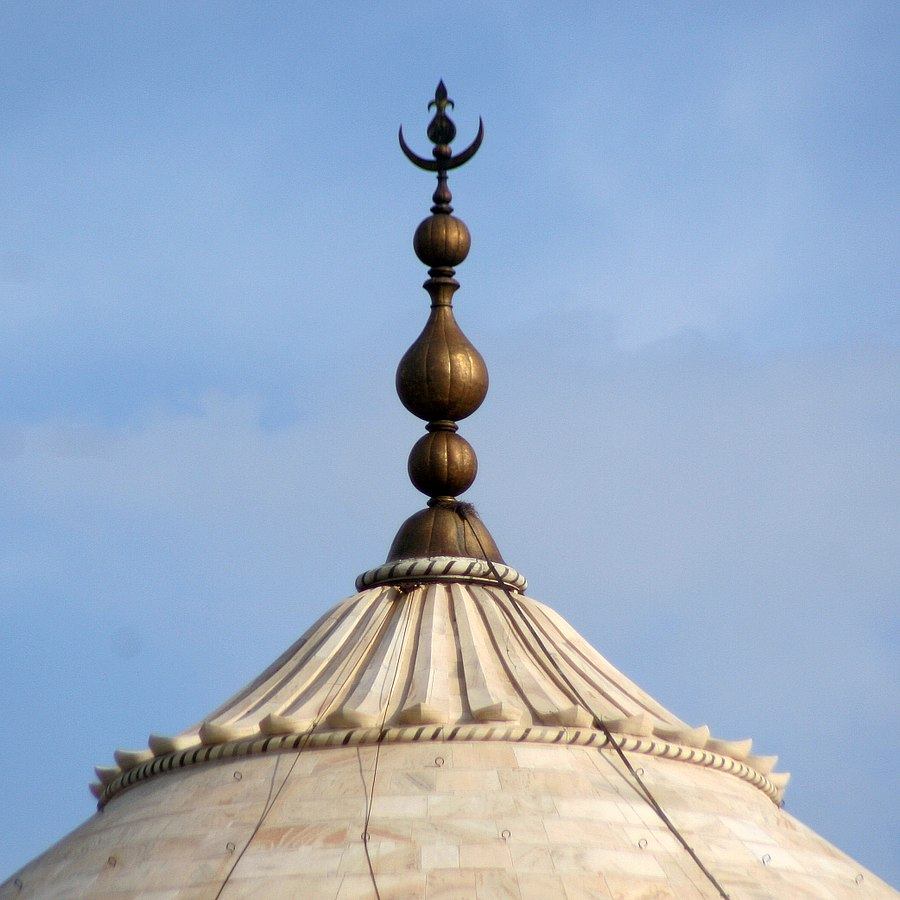
- The original finial of Agra Taj Mahal was made of gold. But later during early 19th century, the gold finial was replaced with a gilded bronze replica.
Taj Mahal in the Mughal Empire’s Context
The Taj Mahal history in Mughal empire reflects more than personal grief — marking the zenith of Mughal cultural achievement. The empire’s wealth and stability allowed for such grand architectural construction, blending artistry with political symbolism.
For Shah Jahan, the monument immortalized not just his love, but also his dynasty’s power and refinement.
Why the Taj Mahal Endures in History
The detailed history behind Taj Mahal monument explains why it has endured for centuries as a symbol of love, devotion, and artistic excellence. It is not merely a relic of the past — it is a living testament to human creativity and emotion.
For a history seeker, visiting Agra is like opening a portal into the 17th century — feeling the same awe that travelers, poets, and emperors felt when they first gazed upon its marble silhouette.
Conclusion
The complete history of Taj Mahal in Agra reflects a story of love, art, and empire. From the construction timeline and facts to the architecture and design, every detail whispers tales of the Mughal era. As a UNESCO heritage site, it remains a priceless cultural treasure, continuing to inspire historians and travelers alike.
Whether you’re a tourist looking for Taj Mahal historical facts or a history enthusiast seeking secrets of Taj Mahal history and design, one thing is certain — this monument will remain a timeless jewel of India.