
Vedas are the collection of the oldest known sacred texts in the world. Vedic texts refer to a vast collection of hymns, composed in Vedic Sanskrit — the earliest layer of Sanskrit. The Vedas also mark the foundation of divine Sanatana (eternal) Dharma (righteousness), which later formed Hinduism. Vedic wisdom elaborates the eternal quest for truth, harmony, and self-realization. Many historians, philosophers and other experts have agreed Vedic wisdom as lessons to the core values of human life.
The word Veda itself means wisdom. It carries the spiritual, philosophical, and practical lessons about life, the cosmos, and the human soul. Early Vedic age lacked any written scripture. The hymns and mantras were only in form of verbal communication — hence, was known as śruti (that which is heard). It only existed in the ancient rishis (sages) and rishikas (female sages). Rishi Veda Vyasa evetually complied and categorized the Vedas between 1500-1000 BCE. While later Vedic texts date back to 1000-500 BCE.
What Is Vedic Wisdom?
Vedic wisdom refers to the teachings found in the oldest ancient Indian texts. The oldest known scriptures of mankind offer hymns, rituals, and mantras, covering every single aspect of human life. Vedic wisdom is not a just religious philosophy, but blueprints for living in harmony— with the self, with all others within the universe. The 5,000 years old Vedic teachings provide insights to philosophy, science, ethics, health, medication and spirituality.
Historically, the Vedic philosophy depicts how ancient Indian civilizations were developed, centuries before the written scriptures born. Subjects like Science, ethics, health, meadication, meditation— all existed in the forms of sholkas (hymns) and mantras.
Rishi Vyasa Veda and other rishis and rishikas formally compiled all Vedic wisdom in four texts:
- Rigveda
- Samaveda
- Yajurveda
- Atharvaveda
Vedic Wisdom— 6 Insights to Life
The Vedas provide a wide range of profound insights that cover every aspect of life—spiritual, moral, intellectual, and practical. Here are some of the key types of insights the Vedas offer:
1. Spiritual Insights
The Vedic path is not to believe, but to realize. Beyond hymns, rituals, and chants, the Vedas quietly offer something profound. The spiritual wisdom clarifies who we are and what truly matters.
The Vedic wisdom offered these spiritual insights for everyone to realize:
Vedic philosophy, especially the Upanishads explain two core insights of life— Atman and Brahman. One means the inner self while the other points the ultimate cosmic reality.
The Katha Upanishad explain this crisply: “The Self is unborn, eternal, and beyond decay.” Your inner self, your Atman is eternal— has no birth, or decay.
And then, the Chandogya Upanishad connects your Atman to the outer universe— Brahman. It beautifully states: “That Thou Art” (Tat Tvam Asi). Your Atman is not separate from the Brahman.
This ancient wisdom encourages us to look inward, realize our divine nature. It helps us to live with compassion and awareness.
2. Ethical and Moral Insights
The Vedas didn’t just speak of gods and rituals— they also guide us toward a life of truth, and inner balance. Even today, Vedic values light the path to a just, peaceful, and meaningful life.
The Vedas offered these five moral and ethical lessons, several thousand years ago:
The famous quote from the Mundaka Upanishad is noticeable in the is found in the National Emblem of India.
“Satyam eva jayate (Truth alone triumphs)”
— Mundaka Upanishad
3. Psychological and Meditative Insights
The Vedas saw human mind not as the seat of the self, but as an instrument of perception and response. Vedic psychology perfectly explains mind as the mediator between the senses and the inner self (Atman). The ancient Indian texts recognize restlessness, desire, fear, and attachment as natural tendencies of an untamed mind. And Vedic path offers techniques to purify as well as master your mind.
Vedic psychology defines these three layers of human mind:
Vedic rishis introduced Ahamkara (Aham= I and Kara= maker) — not as the ego, but as “I am the doer”. The Vedas and Upanishads explain Ahamkara as the mistaken identity of the Self with body, mind, and emotions.
Dhyana or meditation is the Vedic practice for internalization. The Upanishads and later Yogic texts focused on internalization through mantra, breath, and contemplation. Our ancient rishis didn’t see meditation as escape — they saw it as clarity. A still mind leads to inner knowing (prajña), beyond surface thought.
Vedic wisdom is a lived experience, accessed through meditation, mantra, and inner silence. Ultimately, Vedic psychology doesn’t end at self-improvement. It leads to awareness and self-realization.
4. Vedic Insights on the Universe
Have you ever looked up at the night sky and wondered —
Where did it all begin? What lies beyond space and time? And what’s our place in it?
The Vedic sages asked these questions — long before the invention of telescope. Amazingly, the answer was far more beautiful!
Instead of offering fixed answers, the Vedas offer mystical insights:
5. Vedic Rituals and Learnings From It
Vedas often remind us ancient fire rituals, chants, and mantras. So, these questions becomes obvious in your mind:
- Why were these Vedic rituals done?
- Are these Vedic rituals still meaningful today?
Suprisingly, the vast Vedic wisdom offers all answers in practical manner. Vedic rituals are not about religion or ceremony — they’re about rhythm, awareness, and inner order.
The Vedas offer very short and crisp answers to these Vedic rituals:
The sacred practices of Vedic age aimed inner discipline and mindful living. As the Yajurveda sacredly quotes — “Let every action be an offering.” It shows how Vedic wisdom can guide your every action and make it sacred.
6. Knowledge Systems and Sciences
About 3000 years back, India had a radically different education system. It didn’t only aim to train the mind, but to refine the self as well.
The Vedic approach to learning wasn’t limited to religious knowledge. It cultivated a broad intellectual spectrum:
These six disciplines together formed the Vedangas. Each discipline plays a crucial role in understanding and engaging with the Vedic literature.
But the true goal was deeper still:
“Knowledge that does not lead to Self-knowledge is ignorance in disguise.”
— Upanishadic thought
The insights gained from Vedangas have influenced post-Vedic studies. For instance, the Kalpa Vedanga studies gave rise to the Dharma-sutras — later expanded into Dharma-shastras. Atharvaveda has the roots of Ayurveda (health), while Shulba Sutras have the roots of Geometry.
In essence, the Vedic vision saw knowledge as a bridge — from confusion to clarity, from identity to infinity.
Relevance of Vedic Wisdom Today
Though the Vedas were composed millennia ago, their teachings remain remarkably applicable in today’s world:
✔️ Mental Clarity in a Distracted World
Vedic meditation focused on one-pointed awareness (ekagrata) through mantra, silence, and mindful breath. Breath worked as the bridge between body, mind, and consciousness.
Yajurveda, the ritual offering version of the Vedas quote: “Control of breath leads to control of mind.”
Vedic Pranayama techniques are now scientifically proven. When it comes to reduce stress, or sharpen focus effectively, no other technique comes even closer to Yoga and Pranayama. The 3000 years old techniue is equally effective in calming modern minds overwhelmed by information overload.
✔️ Purpose-Driven Living
Ancient Vedic wisdom encouraged Svadharma — your own dharma, your unique duty. Your Svadharma isn’t about what’s popular — it’s about what’s authentic to your nature, skills, and role in the larger cosmic order (Rta).
Bhagavat Gita explains your Svadharma in a single quote, echoing the Vedic thought:
The concept of Svadharma helps individuals align career, relationships, and choices with their inner nature. Vedic wisdom emphasised willful living with a simple question: “Are you following your path — or someone else’s?”. It always fosters deeper satisfaction to chose your own path of living.
✔️ Ethical Leadership and Decision-Making
Vedic values emphasise leadership not for power, but for balance, justice and inner clarity. In Vedic tradition, leadership wasn’t about control — it was about alignment with Dharma. Hence, decision making was always driven by ethics — not by ego.
Vedic philosophy frames decision-making as an inner process guided by:
Vedic wisdom also emphasised three core values — truth (satya), non-violence (ahimsa), and service (seva). Such leadership was deeply ethical. Because it committed to uphold balance — not personal gain.
Eventually, Vedic wisdom teaches: “Ethical leadership begins not with strategy — but with clarity of self and purity of intent”.
Conclusion: Timeless Wisdom for a Timely World
Vedic wisdom is not a relic of the past. Instead, it’s a living bridge between the ancient and the modern — between inner clarity and outer complexity. It offers insights that go beyond eras, cultures, and systems.
Vedic learnings are not static. They are alive — evolving with each generation that engages with them. The timeless wisdom of the Vedas offer inner peace and clarity in the disturbed and distracted modern world.
From Svadharma and consciousness to ethics and cosmic order, the Vedas provide a framework. Not just for belief, but for living thoughtfully.
“Truth is one, though the wise speak of it in many ways.”
— Rigveda 1.164.46
In rediscovering the Vedas, we are not going backward. We are moving inward — and forward — with greater clarity.
You May Also Like:
Nalanda University History – The Lost Intellectual Capital of Asia
Historical Value of the Rig Veda as a Source of Early Indian History

History of Delhi: Rise, Destruction, and Rebirth of India’s Eternal Capital

Establishment of the Delhi Sultanate: How a New Era Began in India
The Making of Raigad: The Capital of Chhatrapati Shivaji Maharaj
Rajput Kingdoms: History, Culture, Dynasties and Their Legacy
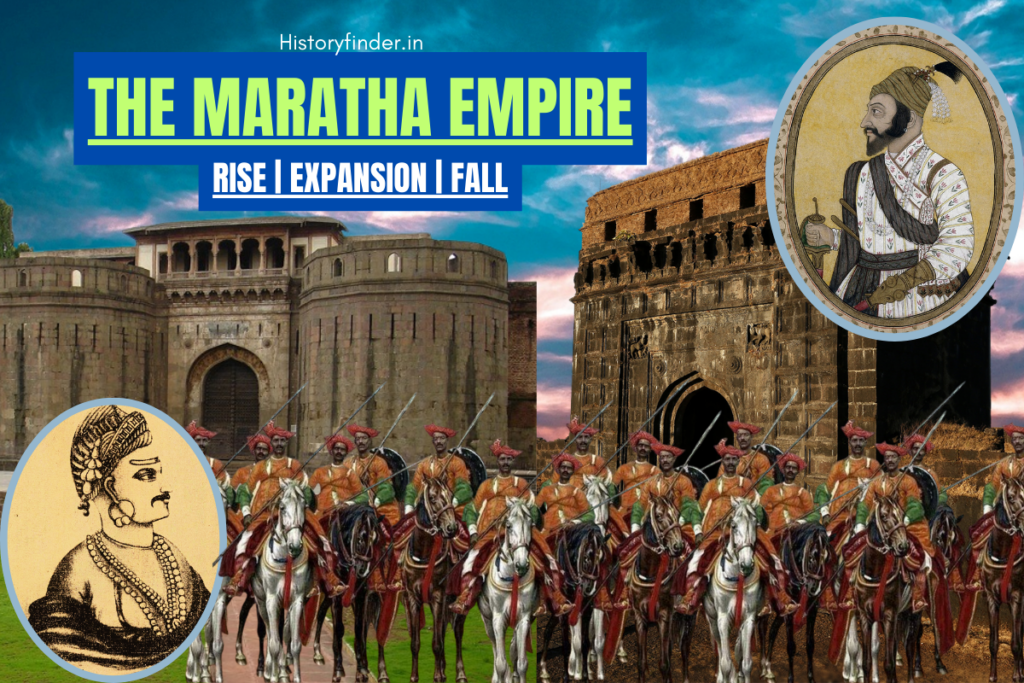
History of the Maratha Empire: Rise, Expansion, and Fall of a Powerful Confederacy
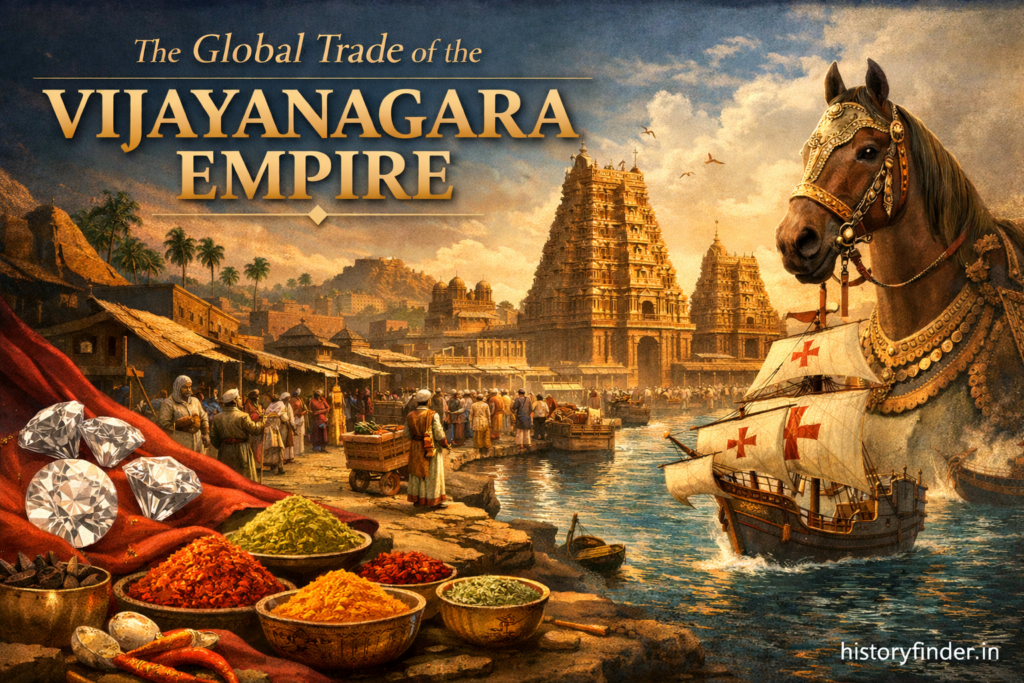
Diamonds, Spices, and Horses: Global Trade of The Vijayanagara Empire
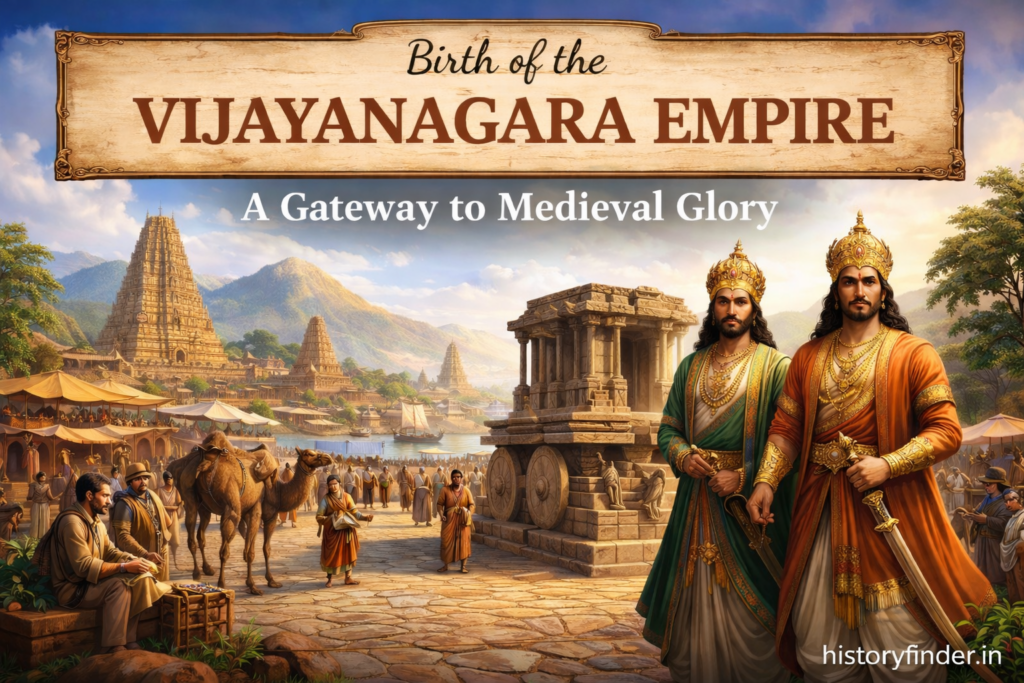
How Vijayanagara Empire Was Born: History of A Grand Revival

Chanakya and Nanda Dynasty: Ancient India’s History Changing Strategies

Chandragupta Maurya and Chanakya: Rise of the Mauryan Empire
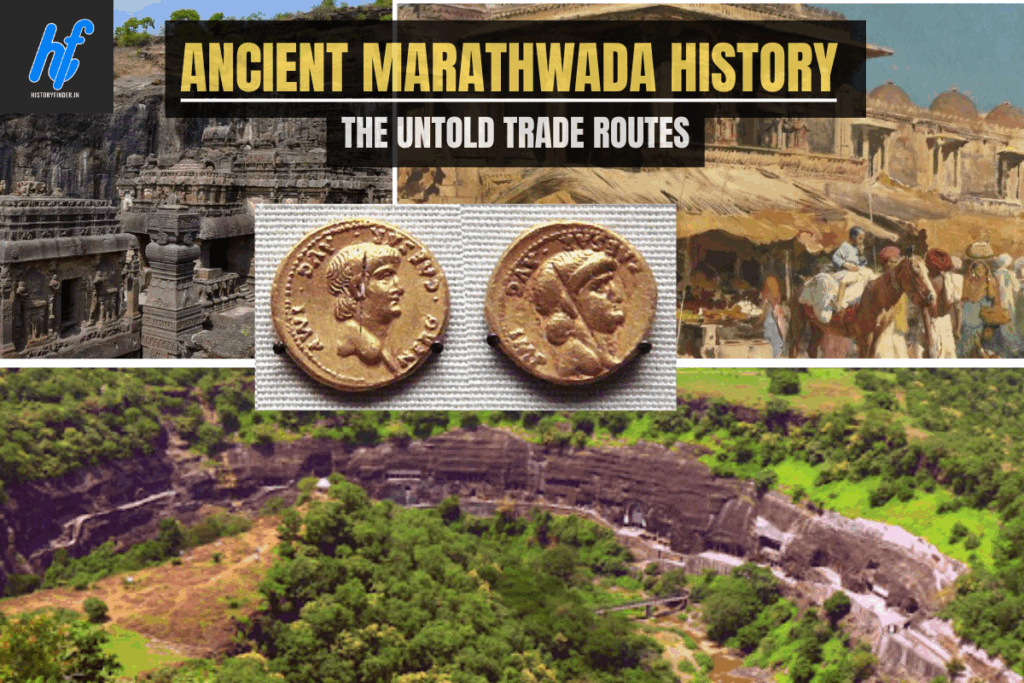
Ancient Marathwada History – The Untold Trade Routes

Independence Day of India: Why August 15, 1947 Was Chosen?

The Bhils of India: A Rich Culture From Bows To Brushes

Jhalkari Bai Life History: The Braveheart Who Fooled the British

Surat Raids by Shivaji Maharaj: The Debated Legacy

Legacy of Rani Lakshmi Bai: 10 Things You Must Know
